Showing posts with label Draxis. Show all posts

Friday, December 15, 2023

More on a Work in Progress

Not too long ago I wrote a blog on a villain in one of my novels and on some of the dynamics surrounding villains and how they use lies to create a false narrative. If you didn't catch it, you can read it here.

Roughly twenty-one years prior to the opening of my novel, working title "Draxis," there was a legendary infamous clash that became known as the Battle for Draxis (the working title of  my WIP novella). It was the first time in their over 13,000 year history that this planet had experienced a war between two factions, where citizens died as a result of the conflict, and it shook the civilization to its foundation. 

This terrible clash arose from a lie. Or more accurately, a series of related lies and half-truths. One leader repeatedly accused his challenger of being a would-be usurper and a pariah who would lead the planet to ruin and enslave the populace (when in fact, the one making the claims was actually the one plotting to do all of those things). 

A manipulator can always find clever ways to twist the truth and turn the tables on his enemy, even when the truth should be quite obvious to any reasonably intelligent human being (...or reasonably intelligent alien, in this case). Sometimes people will buy into lies simply because they want to believe them, and because they prefer the status quo over change. Even if it promises to be for the better, many see change as disruptive and unsettling. "Don't upset the apple cart!"

My mission in writing this story is to present the unfolding drama in such a way that the reader can't be sure who is truly the Good Guy and who is the Bad Guy. Only the two opponents' actions and decisions in the course of the events will reveal their true characters.

This story is told from the perspective of Giadius [GEE ah Dee us], who is an important figure in the saga not only for who he is, but for how he later influences two central characters in the following novel. But at this point in time, he's definitely standing firmly in the grey area of doubt. He, like the reader, will have to make his own determination who to align with as events unfold.

I anticipate this story will be novella length, and if all goes according to plan, I'll release it as a companion to the full-length novel. 

Here's a quick peek at the opening, which I'm just beginning to hammer out. It's still very much a work in progress. All comments or questions welcome.

________________________________________

The Great Palace 

The City of Tahr

Draxis

From the high balcony, Giadius watched a star fall from the infinite blackness of the heavens. A burning star, its light flooding the dark plazas below in an expanding circle of illumination. Sound followed the light, a low rumble that crescendoed into a terrifying roar. Next came the blasts of searing heat. Giadius raised a hand to shield his face from the burn.

In the city below him, those awakened by the calamity rushed into the streets, screaming in terror. He felt no panic. The knowledge and memories of such an event had faded from the conscience of Draxis a generation ago. But he understood. Ultas hadn't prepared his people, so what could this mean to them but the end of their world?

Members of the royal staff flooded onto the balcony beside him, freezing in place to cry and curse and stare. Giadius exploited the confusion to slip through their ranks and back inside the palace before any came to their collective senses. He sidestepped the squad of guards charging up the steps to the second level and made way down to the now unguarded entry to the royal chambers below. Pitting his full weight against the massive door, he pushed it open just enough to angle through. Outside, he found the halls of the palace deserted. 

This was his epiphany--his sign. A chance to slip his invisible bonds and disappear in the chaos. He knew what this meant. He knew who was coming. 

He would be the first to meet the invaders. 


Saturday, August 26, 2023

Storytelling: Effective Villains and Believable Lies

Well, my posts have certainly become few and far between lately. I apologize for going dark. There's a lot happening in the background called "real life" but I won't bore you with the details because it's probably non-relatable. Let's just say, "It's been the best of times, it's been the worst of times." (Inspired by a quote from Charles Dickens.) 

Lately, I've been doing a lot of studying and thinking and applying it to my work.

I've been studying what has happened in the past, what is happening now, and what may lie ahead...and how those elements can be interwoven into fiction. (I won't go into a lot of detail because my personal experience "won't compute" for a large number of people.) 

Today, I want to just focus on one of the things I've been studying and that's the nature of lies....and people who lie....and people who use lies for their own purposes and gain. It's a pretty dark rabbit hole to go down in reality, so let's not do that. 

I'll just post a few memes on my philosophy on liars, which is pretty simple:


and


and especially...


In fiction, we often create characters who lie as a means to advance their own position, their own selfish plans or to defend themselves from being judged too harshly by others. A really effective villain can usually weave lies and deception that will fool and mislead a great many people. If they weren't capable of that, they'd be reduced to a mustache-twirling Snidely Whiplash. 

Old Snidely isn't very convincing, so a truly skilled villain learns three basic tactics: 
1) How to make lies sound like the truth, 
2) How to persuade a lot of other people to buy into his/her lies (usually with some sort of reward), and 
3) How to punish those who disagree with those lies.
"I'll get you, my pretty...and your little dog, too!"  

Number 3 may be one way to discern if someone is telling the truth. If they are telling the truth, and someone disagrees, they won't punish that person for not believing them or for being intelligent enough not to buy in to their deception. 

But the thing about villains is that in the end, they lose. Usually big time (...unless of course, the author is planning a sequel). 

If the story has no sequel where the villain returns, then the end is just The End. 

Justice is served. Judgement is rendered. The evil villain is doomed. Truth and goodness prevails.


These are the themes I'm working with in a current novel. The villain has credentials, power and influence and portrays himself as a good and decent man. He fools a lot of people and manages to convince them that he's their rightful leader, that his challenger is a threat to them and their way of life--and further, that his opponent is the one who lies and misleads. But beneath his shining white robes (literally) and his dark cloak of deception, he's not a righteous man, he's a self-serving and demented human being. (Okay, this is sci-fi so he's really an alien, but he's human enough to pass.)

But the thing about lies is they eventually ensnare the one telling them.

"Oh what a tangled web we weave, when first we practice to deceive." 

That phrase is often attributed to Shakespeare, but it was actually said by Sir Walter Scott. According to the site No Sweat Shakespeare, it means: 
"...when you lie or act dishonestly you are initiating problems and a domino structure of complications which eventually run out of control."
Yes, he and his cronies make a pretty convincing argument. Jointly, they have a talent for taking the truth and twisting facts and circumstances to serve their own end game. You can fool many of the people all of the time...but eventually, the truth is going to win out.


I'm intentionally avoiding the name of the villain character because spoilers...but the current working title of the story is in the tags, if you're curious.

Have you read any books with a thoroughly convincing villain who cleverly manipulates the truth? Let me know the titles and I'll check them out. 

Until next time.

Monday, March 20, 2023

Eschatology and the End of Days

Eschatology (/ˌɛskəˈtɒlədʒi/ (listen); from Ancient Greek ἔσχατος (éskhatos) 'last', and -logy) concerns expectations of the end of the present age, human history, or of the world itself. 

The end of the world -- or the End Times - is predicted by several world religions with teachings or prophesies that specific events will reach a climax and result in ultimate catastrophe. 

Believing the end of the world is imminent is known as apocalypticism, and over time this belief has been held by both members of mainstream religions and by doomsday cults.

The last few years -- and particularly in the last few months -- there's been a lot of talk and speculation about if we're approaching the end of the world as we know it. I've been doing a lot of thinking about that myself. Cue the earworm R.E.M. rock song...
 

That song was actually released in 1987, so we've been waiting for the end of the world as R.E.M. knew it for a very long time -- 36 years. Other end dates on civilization and/or the human race have certainly come and gone in those three-and-a-half decades. 

This is a blog I wrote over 11 years ago that also dealt with the subject of eschatology and the End of the World and how it intersected with my writing life (at that point, it wasn't an authorly life yet). 

I promise it's not a doom and gloom read, and it might even give you a smile.

__________________________________


Something's coming. Something BIG!

Or not.

Lately I've been living a sort of immersion scenario while I work on my third novel and reflect on the current uneasiness in our culture surrounding an upcoming date on our calendar.

Let me explain...

Living With World-Changing Prophecy

2012

We're living in a time where our world has gone edgy with expectation.

Many cultures of the past--the Mayan, the Hopi, the Chinese, and others--have all hinted that on one particular date in the future something big is going to happen. Many researchers agree they are all pointing to the same date--December 21, 2012.

12-21-12

Eleven months from now.

No one really knows exactly what will happen, only that an ancient calendar comes to an abrupt end on that particular date.

Some forecast doom and gloom in the eerily prophetic Mayan calendar--a calendar that has supposedly marked every major astronomical event for eons. Its terminus has been put forth by some to correlate to an energy surge from alignment with the galactic rift, a polar shift, intense solar flares, impact by a stray comet or errant asteroid, a direct hit from a gamma ray burst, an overdue supervolcanic eruption, shut down of the ocean conveyor and the inevitable instant ice age, or the mysterious planet X that's supposedly going to swoop in from the edges of our solar system, gallop through the orbital planes of the inner planets to collide with Earth.

Some believe it will be a change for better, for enlightenment, for the next step in human evolution.

And then there's the school of thought that nothing is going to happen at all. It's just going to be another date on the calendar.

After all, how can an ancient society predict what's going to happen in the future--long after their civilization has ceased to exist? How can they know?

There's actually a precedence for that, according to some researchers. They're studying a sudden spike in global consciousness the morning of September 11, 2001, hours before the events of that day actually occurred. They claim random event generators can predict catastrophes that are yet to happen. [Read more.] Are they quacks, or is there really a way to tap into a global consciousness and "see" events that are yet to happen? Are some people wired to tune in to the future?

Was Nostradamus a prophet who predicted the rise of Hitler and other upheavals in history, or merely a very clever creator of enigmatic words with symbolism that could be interpreted or twisted in any way to mean anything a person chooses?

The Great Prophecy of Draxis

In my work in progress, Draxis, the people of this fictional society are living with a prehistoric prophecy that might be coming true. And just like the theories surrounding 2012, many are jittery and fearful. They aren't sure if the change that's foretold will result in annihilation, or glorious evolution...or if anything will happen at all.

The Great Prophecy was written by a philosopher-visionary named Hamaden Sarcassius sometime around 9,000 BC by our time scale, the text carefully preserved for over twelve thousand years.

Who Sarcassius really was is lost to the centuries. Heck, maybe he was a mad. Or maybe he had ulterior motives for penning his prophecy. Or maybe--just maybe--he had the gift of vision and sent a dire warning to his race across a great expanse of time that something was coming--something the Draxians needed to prepare for.

The events of the Great Prophecy center around a person identified only as "the Flame," who according to the scripts will make a single decision that will destroy or "turn" their world.

The novel opens as the one who many believe may be "the Flame" wakes up on Draxis after being abducted, drugged and hurled through space and time to be thrust into this maelstrom of fear and fanaticism spurred by her arrival.

The parallels between the Draxian empire and our present day culture are easily drawn. Two societies living with the fear, apprehension, skepticism and denial surrounding a world-changing prophecy and the potential Armageddon it portends. Or doesn't.

No one on Draxis really knows what the words of Sarcassius mean.

And no one on Earth really knows what the end of the Mayan calendar indicates.

We live in interesting times.

Write what you know.


Wednesday, February 8, 2023

Pyramids: Fact and Fiction

Writing my upcoming novel, Draxis, involved a lot of research into ancient cultures, and primarily the Egyptian and Olmec societies. That, of course, entailed a lot of research on pyramids.

Pyramids turned out to be a pretty fascinating subject. 

Ancient Pyramids were Bright and Shiny


The pyramids weren't always crumbling masses of dissolving limestone.

That's how the pyramids appear now, as immense pointed structures of jumbled sand-colored rock, but they were once smooth-sided, being adorned in polished limestone. These casing stones were individually cut to specific angles to seamlessly cover the structure, and were then sanded until they shone. In the ages since, this polished outer layer has been knocked loose by earthquakes or dismantled by more modern residents for buildings and other uses.

Sudan has More Pyramids than Egypt

Egypt is renown for its pyramids and has around 140 (that we know of to date), but there's another culture that has even more. To the south, in present-day Sudan, more than 200 pyramids have been found!

Until the mid-20th century, most archaeologists considered the Sudan pyramids as nothing more than extensions of Egypt, instead of the remnants of a unique culture. But the pyramids in Sudan, most located in Meroe, are structurally different. They are smaller, steeper, and surrounded by collections of chapels and monuments that are unique to Nubian culture.

Though Egyptian-type pyramids are found in a very large area, including Italy and Greece, there are many forms of pyramids that are located in widely diverse areas -- including deep underground.

The Americas Contain More Pyramids Than the Rest of the World Combined — And the Largest!

In ancient Mesoamerica, a region spanning from much of modern-day Mexico through most of Central America, peoples such as the Olmecs, Incas, Aztecs, and Mayan had their own brand of pyramid structures dating back to around 1000 BCE. In fact, they built vast numbers of them but unlike the Egyptians, they didn't use them exclusively as tombs.


The most well-known structures are in Teotihuacan (Tay oh TEE wah con), an ancient Aztec city near present-day Mexico City. The Pyramid of the Sun was the largest of these structures and was built by constructing retaining walls which were filled with rubble, then had an adobe retaining wall encompassing the structure that was cased in limestone. The nearby Pyramid of the Moon was built the same way. It was discovered that the Pyramid of the Sun hides a secret: another pyramid, accessible through a cave beneath the structure. These pyramids have been dated to 1 and 200 CE, but the pyramid inside the cave is much older.

The  Olmec civilization built their own brand of pyramids. The Great Pyramid in La Venta (near present-day Tabasco, Mexico) is different: It’s essentially a clay mountain. Later Olmec pyramids were also earth mounds, and they were only covered by stone steps to finish them.

The Great Pyramid of Cholula, or Tlachihualtepetl, in Mexico, is the largest pyramid on the planet -- but by volume not by height! It dates back to circa 200 BCE, and in essence, it's basically six pyramids stacked over each other. 

Later civilizations expanded this earlier work, taking care to preserve the older structure. The new layers are composed of adobe bricks. Over time, the pyramid eventually became covered by jungle foliage and was later abandoned. That may have been fortunate, because when the Spanish invaders swept through, led by Hernan Cortez, over 3,000 inhabitants were murdered and most of the infrastructure of their culture was destroyed. The Spanish apparently thought Tlachihualtepetl was just part of the natural topography because it survived the assault by the invaders who dismantled or destroyed many of their other buildings.

Discoveries are Still Being Made

The tallest of the Egyptian structures, the Great Pyramid of Khufu, has been under rigorous study for more than a thousand years. Yet, even today, we’re discovering more about what is inside, including vast new chambers that were previously sealed and unknown. Using cosmic ray technology, the Scan Pyramids project -- a collaboration between Egyptian, French, and Japanese research institutions began in 2015 -- is using updated technology for a non-invasive searches inside the structures.

To date, they’ve found two previously undiscovered areas: a corridor on the north face of the pyramid and a huge void above the Grand Gallery measuring at least 100 feet long. It appears to be a similar structure to the Grand Gallery that connects various areas of the pyramid, including the burial chamber.

A team of American researchers wants to use other technology to get a complete three-dimensional image of the void area to determine if it's just a structural facet or a previously unknown chamber. Once completed, this study could provide much information on exactly how the pyramids were built.

Pyramids According to Draxis

My work-in-progress (temporary title: "Draxis") puts a totally different spin on pyramids. In this fictional version, the heroine learns that the Egyptians didn't build the pyramids, they merely repurposed the structures (including the Sphinx) that were already there, and were far, far older than the Egyptian dynasties by at least 6,000 years -- and still standing, though crumbling. 

The Egyptians performed the mother or all fixer-uppers and repaired and re-coated the massive structures to be the bright and shining monuments their culture became known for. 

They re-carved the head of the giant Sphinx, once a massive lion believed to honor the constellation of Leo -- which was in a different position in the skies in that earlier time. The Sphinx structure had been built in that ancient past so it faced directly toward the constellation shaped like a lion. The Egyptians carved the head of the lion into the likeness of their Pharoah, leaving the head clearly out-of-proportion to the rest of the structure, as we can see today. 

The mysterious earlier civilization had build the pyramid structures as giant power-generating stations that drew energy from the natural world to supply their advanced society that had thrived until the Younger-Dryas event wiped out civilization, as well as technology, as they knew it. Millennia later when the Egyptians re-worked these structures they found a maze of passages and chambers inside that they didn't understand, but branded with their symbols and painted with their stains to appropriate them as their own. They then used them (possibly) to bury their venerated dead.

The civilization on the planet Draxis also uses pyramids for most of their primary structures, though they more resembled the pyramids of the Americas with stepped terraces and attached porticos. The Draxians use primarily pastel colors to finish them -- soft beiges, peaches, aquas and lavenders -- with elaborate geometric murals. They didn't build them for looks. They built them because they were the standard for structures in their hot, dry, sometimes harsh culture -- stable, cool and energy-generating.

Although their grand palace is not a pyramid, it does have twenty-seven towers topped with pyramidal structures to generate energy, just as Earth's variety are suspected of doing by some researchers. One of these towers is used by the royal physician for it's healing properties, and this is where the heroine, Katrina, awakes at the beginning of the story.

Who the Draxians are, and what their civilization represents is what Katrina will discover as the story unfolds. Draxis is a civilization in decline, and an ancient legend says that a person known as The Flame will either save them or plunge them into oblivion. The ruling monarch, King Alii'us (Ah LEE us) loves Katrina, and believes her to be The Flame. But can he convince her that both he and his planet need her desperately even though she demands to be returned to her former world, and her former life?

This is the opening of the story (prefaced by a brief prologue that sets the stage for Katrina's journey). 


If you enjoyed the premise of "Draxis" and you're curious about the upcoming book, here's a bonus for you. There's a free short story set in the world of Draxis available on this blog titled The Recruit. It's a quick read, but it's packed with mystery and action, and there's a character from the story you'll meet in the book. 

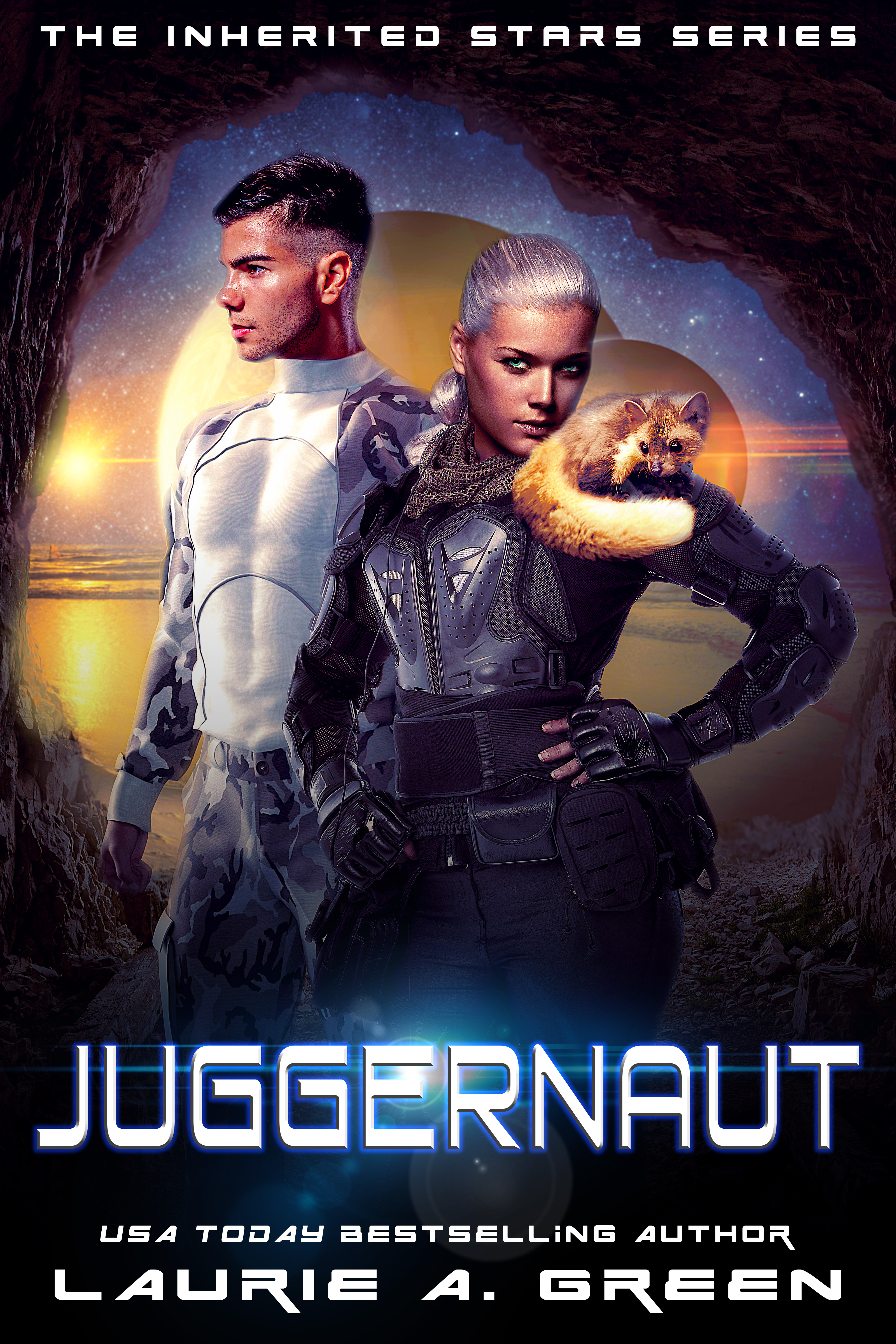
The premise of The Recruit is that it's a scene taken from the book, but turned inside out and presented from a different POV. It takes place in the ancient jungle known as the Green Death, which is another name for The Black Stand mentioned in Juggernaut. (Juggernaut takes place on the planet LaGuardia, which had it's name changed from Draxis centuries before.) Click this link to read The Recruit.

Monday, October 17, 2022

To The Stars

Now that I've wrapped up my aquatic science fiction romance novella, The Shell and the Star (which you can now read in its entirety by clicking the link), I'm moving on to my next planned release. Here's a bit of background for the excerpt included below.

We tend to think of those who work in space as "astronauts," but that term (rooted in the Greek words for “star” and “sailor”) generally is only assigned to those from the United States, Europe, Canada, and Japan.

Russia calls its space explorers "cosmonauts" (from the Greek for “universe” and “sailor”). 

But did you know we refer to Chinese astronauts as “taikonaut,” which combines the Chinese word for “space” and the Greek for “sailor.” 

Except that term isn't used in China. They call their spacefarers yuhangyuan, which is derived from words for “space” and “traveler.”

Star Sailor. Universe Sailor. Space Sailor. Space Traveler. They're all pretty poetic terms.

Venturing into my fictional universe, The Inherited Stars Universe, those who travel in spaceships are first called Ta'kaar or Voyagers of the Vortex. The term for a single traveler is Ta'kar. They aren't exactly space explorers, since their path only leads to, through and out of a stabilized wormhole. The Vortex --also known as "a crossrip in time and space" -- was discovered and exploited as a deep space conduit by their ancient and much more advanced forebearers. 

But they don't venture beyond its immediate vicinity for the first 13,000 calendars or so of their civilization's existence. (Calendar is the term they use for a standardized year, since the term "year" is strictly an Earthly term tied directly to our single planet's orbit.) They have no need or desire to explore the great beyond.

Then things...change. And those changes lead to the known galaxy you've read about in Inherit the Stars, StarDog and SpyDog

In my novella, Juggernaut, first released in Pets in Space 5 (and about to be published as an individual book in a slightly longer version) is a prequel to Inherit the Stars, taking place about  five calendars before the anchor novel, but nearly 1,500 calendars after the Draxian trilogy I'm working on now. 

In this story, the heroine reveals her controversial beliefs to the hero regarding the planet where they are based to perform their separate missions -- the planet LaGuardia. 

Here's a brief excerpt from Juggernaut:

___________________________________


Dek studied his face. He maintained steady eye contact. No nonverbal cues that might suggest he was fabricating the story. He seemed…straightforward. But the truth was, she didn’t know what his motives truly were. Or what he was doing here on Site D. He was an enigma in her orderly life, and she’d never encountered a mystery she hadn’t systematically unraveled. Eventually, she’d get to the bottom of what secrets lurked behind those dark, soulful eyes. 

He turned to the door but paused at the exit. “Ask you a question, A-Com?” 

“Quid pro quo?” she countered. 

“No.” He pursed his lips, shaking his head. “I don’t expect any reciprocation for the intel I provided. I’m just curious about something.” 

“That being?” She joined him at the door. 

“When I asked if you were Draxian, you said ‘not necessarily.’” 

“Actually, it was when you said LaGuardians are Draxians that I answered ‘not necessarily.’ The Alliance insists Draxis never existed. That it’s just a myth.” 

His gaze remained locked on her face. “Somehow, I doubt you put much stock in what the Alliance claims.” 

“Not when they’re trying to bury the truth about my planet’s past so they can fabricate a history of their own.” 

“Right.” He rubbed Cassie’s pointed little ears. “For what it’s worth, I also find the Alliance’s attempt to erase twelve thousand calendars of human experience offensive. Maybe we have more in common than you know.” 

Dek opened the seal to her quarters. “I hope you never give me reason to think otherwise.” 

He paused to meet her eyes. “That’s my hope, too.”

_________________________________________

As I mentioned in my previous post on conclusion of The Shell and the Star, Juggernaut holds a clue to why the people in Jinn and Trey's time were abandoned by the known galaxy. I hope to have the expanded Juggernaut published yet in 2022. 

Have a great week. 


Friday, October 8, 2021

The Recruit: Part Five - An Adventure in the World of Draxis

This is the fifth--and final--installment of The Recruit short story, a companion story to my upcoming novel, Draxis (working title). 

This ending was a bit tricky to write in order to avoid major spoilers for the novel, but I will say that 'the recruit' is a major character in the book. As I mentioned before, the setting details and situation were taken directly from the novel, but it's told from a different POV. 

If you'd like to refresh with the last installment, you can see it here:

The Recruit: Part Four

If you would prefer to read the story in it's entirety, you can view it here:

The Recruit (short story)

I hope you enjoy the conclusion of The Recruit. Comments welcome.

_________________________________ 


I awoke to pain in Denarri Ranger Station, but the point is—I awoke.

Someone stood over my gurney, and after a fight to focus my eyes, I recognized Gallin’s creased face. My eyes dropped to his side. He didn’t carry a Blade of Duumarr.

“My recruit?”

Gallin huffed and his eyes shifted left. I followed his gaze and found the green eyes of my partner. Yes, partner. He’d earned it.

His back was to the wall, arms folded, his Death Ranger uniform tattered, but without major injury and the notorious sword parked in its scabbard.

I nodded to him—or tried.

“We’ve had a word,” Gallin muttered. “Now the two of you talk.”

I looked to the recruit, confused. “Talk?”

Gallin’s mouth skewed down in a grim frown and he left the room.

My attention moved back to my partner. “You carried me back?”

“Yes.”

I tried again to nod. “You saw what I did?”

“Yes.”

“But still you did not kill me.”

“No.”

“But you are Duumarrakhan.”

He unfolded his arms, moved nearer. I might have been intimidated if he hadn’t been shaking his head. “No.”

“Then who-” I realized my blunder. A Tahila Death Ranger never asks that question of another. That was The Code.

“Just another who defies senseless laws,” he said.

In this realm, such rebellious words are never spoken. Not even here. Laws are absolute, and the punishment for breaking them is final and universal. Death. So I was left pondering the enigma of this man who wielded the blade of the Order, but spoke against its black justice.

When a person came to the Green Death he came knowing that, sooner or later, the great forest would take him…and his past. But I knew that would not be the fate of this one, even if he did not know it himself.

“I was trained by a Duumarrakhan,” he volunteered. “He was the last of his kind…or so we believed.”

I grunted softly. “This explains much.” Although his admission raised many more questions than it answered.

I didn’t learn until much later, after we’d ventured out together on many campaigns into the Green Death, who my partner was and why he was here. Much was revealed when the One the Ancient Legends Speak Of came for him and the recruit left the Green Death at her bidding to resume his former life.

I did live to see my ninth season. And even my tenth. I rose through the ranks to head ranger, and trained more recruits before my time in the Green Death came to an end.

No. I didn’t die.

The recruit summoned me out of hell’s jaws to take my place at his side. Yes, I--a doomed Tahila Death Ranger invited to serve in a place of high esteem. In the thousands of years the rangers had patrolled the Green Death, never before had one been plucked from the ranks in such a way as this.

The age of prophecy was truly upon us.

But that, my friend, is another, much longer, story. My part of this tale, this small thread in the greater legend, ends here.


Friday, September 3, 2021

The Recruit: Part Four

Here's Part Four of the ongoing short story that's a companion to Draxis (WIP).

This one comes with a major TRIGGER WARNING!

This snippet involves a life-or-death situation with hunting beasts of prey and somewhat graphic descriptions of the struggle. If you are a sensitive reader in regards to animals (even monstrous predators who love to eat humans) then please don't read on.  

If you prefer to read the entire story to date, including this installment, please click here:

The Recruit (All Parts Posted to Date)

Otherwise, here's a brief refresher from the last post:

From Part III:

It crept up on the recruit from the forest gloom. I knew from experience it would launch without warning from heavy-muscled haunches and twist its head mid-flight, driving upper and lower saber-toothed fangs into the recruits back, crushing or severing his spine. Then, he would lay paralyzed as the beast began to feed and the rest of the pack closed in to tear him apart.

This recruit would pay the price of overconfidence, and Gallin would have his prize. But more than that, a burden would be lifted from my shoulders and a threat eliminated. I might yet see my ninth season.

 _________________________

 The Recruit: Part IV


So why this troubling feeling I was not in the right? The Duumarrakhan was doomed to die anyway. What did it matter how and when?

Because there was something about the man…

“At your back,” I wolfed, but he was already in motion.

The man bounded sideways the moment the farratora lunged, planted a foot on a massive trunk as he drew Gallin’s prize from its scabbard. He kicked off the tree, inverted horizontally over the surprised predator, and drove his blade down through the beast’s opposite shoulder. Gravity pulled the man back to the ground, and the embedded sword sliced down diagonally like a paper blade, severing the beast’s spine. The farratora collapsed in a heap and lay still, pike-like fangs still bared. It was a mammoth male, probably the pack alpha.

I rose to my feet, heart-pounding. Farratora forgotten.

I knew I had just witnessed something few alive had seen. The kill of a Duumarrakhan.

And I was not going to see my ninth season.

A chorus of growls in the darkness confirmed that thought. The dead alpha’s pack was preparing to charge.

I drew my blade and used the tree to thwart a rear ambush. From my peripheral, I saw the recruit edging in my direction. His artful blade pierced deep through the eye of one large male, dropping him. He stepped to the side, blade humming low, to severe the legs of a smaller, charging female. She tumbled head-over-tail with a look of confusion when her stride shifted to missing paws.

From out of the blackness to my right came a flash of fang in flame-red jowls as the first of many rushed me. Four more came behind him. Big pack of them! I couldn’t fight them all with a mere sword. I reached for my belt, glanced at the recruit, then hit the pulse button. The four dropped from the shock wave, and I finished them off before they recovered.

The recruit fell to his knees, hit by the fringes of the concentrated energy ring, and knew what I had done. Shock weapon—cursed and taboo. A religious abomination. If he was a Duumarrakhan, and a farratora didn’t finish him first, I was dead. He’d never let me live after committing such an atrocity. He didn’t yet understand the rules. Most Tahila Death Rangers were capital criminals already, and breaking religious laws to survive was of little matter.

My moment of distraction allowed a farratora to reach me. He made one pass, raking his claws down my sword arm, before turning back to finish me. I hit the button at my belt again as I shifted the sword to my offhand and ran him through where he fell.

The recruit had dodged out of the range of the energy ring, but then he was beside me, scowling down at my belt. Blood flowed down my arm, and my head was spinning. The wound was bad. In a moment, I’d lose consciousness, and the recruit would finish me. Beheading was the price for my crime—by guillotine or blade.

He didn’t have a guillotine handy. His sword would do.

To be continued...


Friday, July 30, 2021

The Recruit: An Adventure in the World of Draxis - Part III

This is a serialized short story set on the world Draxis, the planet that's central to my upcoming trilogy and frequently referenced in current stories in the Inherited Stars Series. 

You might think of Draxis as a legend comparable to the legend of Troy. For a long time the world wondered about this once-great civilization. Did Helen of Troy's face really launch a thousand ships? Did Achilles and Hector once engage in combat outside its gates? Did the great walled city of Troy ever truly exist?  

That question was left unanswered for centuries, until the ruins of Troy were discovered -- a vast, walled, Bronze Age metropolis  -- just as Homer described it and just where he said it would be. 

Now imagine Troy as an entire planet lost to time -- but buried in a very different way.

The Recruit was originally written as bonus material for Draxis--a scene turned inside out and told from a different character's POV. I hope you enjoy your first venture into the lands of Draxis, and that you'll come back for more of The Recruit in future blogs. 

This is Part III. For those who read the previous two parts, there's a brief recap below, or you can read Part I and Part II by clicking these links:

The Recruit: Part I

The Recruit: Part II

Or if you'd prefer to read all parts posted to date, you can find it here: 

The Recruit - All Parts to Date

Recap to Date

In the last snippet post, Baranar had just met a new recruit to the Death Rangers--a company of hardened men who patrol the ancient, dark and menacing forest nicknamed The Green Death. This new recruit is to be Baranar's partner. 

Baranar and his peer, Gallin, wager about how long this new recruit will survive (not long) but the stranger overhears their conversation and confidently counter-wagers them his sword that he'll survive the tasking. 

Then something catches Gallin's eye. The new recruit carries a Blade of Duumarr, the weapon of an order of deadly assassins believed to all be long dead at the hands of a past High Priest. If this stranger carries the blade, could he possibly be a lone survivor? Baranar follows the man to the stores, dreading the thought that his new partner may be a deadly assassin.

Part III begins as Baranar and his new recruit begin their duty as rangers in The Green Death.

_________________________________

My back to a tree, I chewed a length of Sibba bark, its spice biting my tongue, and studied the recruit. He stood in a tiny, open glen, staring up the hypnotic pipe of a Tree Well—a rare glimpse of sky surrounded by a circular wall of impossibly tall trees. Tree Wells often created illusions in the human brain of being trapped in the depths of a bottomless pit with no means of escape. A sensation of suffocation was the usual, and milder, reaction. Some went mad and tried to claw their way up to the unreachable heavens from the primordial floor. Those hapless souls were picked off by the hordes of flesh-eating limb dwellers that waited overhead.

But the recruit seemed unaffected, his face tipped to the heavens with the faint trace of light on his cheekbones. Was he praying? A chill swept over my skin. A Dumarrakhan might pray before battle. So rapt in his thoughts, the recruit was unaware what lurked in the ebony shadows just beyond the clearing.

I grimaced. This one would need no help finding fate.

The Green Death was ancient and wicked. No one knew how long it had existed. The trees never died here. They grew tall as mountains, spiking thousands of feet into the atmosphere. Below the treetops, countless layers of canopies formed distinct levels, each thinner of vegetation and deeper in twilight than the one above. Little light filtered through the tangled masses of leaf, limb and vine to the forest floor below. By day, a ranger might not always require lit lamps to travel, but by night, the Green Death was as dark as the miles-long lava tubes of Sarcassius. Though not as still and never as lifeless.

Something shifted in the twilight, little more than a blur of black in blackness to my trained eyes. I didn’t see, so much as sense, the fluid steps of a stalking farratora. I braced my knees and pressed my back to the tree, ready to jump. Where one farratora prowled, a dozen more were sure to follow.

It crept up on the recruit from the forest gloom. I knew from experience it would launch without warning from heavy-muscled haunches and twist its head mid-flight, driving upper and lower saber-toothed fangs into the recruits back, crushing or severing his spine. Then, he would lay paralyzed as the beast began to feed and the rest of the pack closed in to tear him apart.

This recruit would pay the price of overconfidence, and Gallin would have his prize. But more than that, a burden would be lifted from my shoulders and a threat eliminated. I might yet see my ninth season.

To be continued... 


Friday, May 21, 2021

The Recruit - An Adventure in the World of Draxis (Part One)

I debated a long while about posting this story, a tale set on the world Draxis, the planet that's central to my upcoming trilogy and frequently referenced in current stories in the Inherited Stars Series. 

You might think of Draxis as a legend comparable to the legend of Troy. For a long time the world wondered about this once-great civilization. Did Helen of Troy's face really launch a thousand ships? Did Achilles and Hector once engage in combat outside its gates? 

Did the great walled city of Troy ever truly exist?  

That question was left unanswered for centuries, until the ruins of Troy were discovered -- a vast, walled, Bronze Age metropolis  -- just as Homer described it and just where he said it would be. 

Now imagine Troy as an entire planet lost to time -- but buried in a very different way.

The Recruit was originally written as bonus material for Draxis--a scene turned inside out and told from a different character's POV. It needs no scene set-up or introduction. I hope you enjoy your first venture into the lands of Draxis, and that you'll come back for more of The Recruit in future blogs. 

The Recruit 

I go by the name Baranar. I will not tell you my real name. It doesn’t matter. What matters is the tale I must tell, because not many know of it. Long ago, a wise man of an ancient tribe on our sister-world, Earth, said that legends are a blending of many voices. This is my voice, and this is my one small thread to weave into the greater tapestry. Here is where it began…

The recruit walked across the wooden floor of Denarri Ranger Station. I listened to the cadence of his steps and studied the set of his head and shoulders. He had a bearing that exuded confidence and competence. My lips twisted into a sneer. More fodder for the farratoras. Another in an endless line of doomed men who came to the Tahila Death Ranger ranks to disappear from society. Or because he had a suicide wish. What crimes had this one committed?

No matter. Here, he’d pay for them all. And soon.

The average lifespan of a Tahila Ranger was three turnings of the moons. If a cadet had the skills to pass initiation—survive the onslaught of a maddened farratora pack or a killdrop by an adult penthis—he might defy the odds.

I defied the odds. For me, eight seasons had passed in the hell of twilight and terror called the Green Death. At twenty-eight suncycles, I’m the “old hand” here. The grizzled veteran. I didn’t survive this long by having new recruits as partners. 

Damn Cannar to the Fifth Hell.

The young man bent his head to speak to Cannar, the Denarri Marshall. The old fool nodded his silver head and raised a hand, pointing my way. The recruit strode in my direction.

Farratora fodder.

“You are Ranger Elite Baranar.” It wasn’t a question. I looked him over. Draxian genes stamped our breed with dark skin pigment, light hair and intense green eyes. What set this one apart was his carriage, the feel to him. Some might call it his aura, but I didn’t believe in mystical hebah.

“That’s my given.” My reply came as a growl. Like most here, my real name and details of my former life are subjects best left unexplored. Here, it’s considered the epitome of rudeness to pry, and social blunders often end in severed limbs…or heads.

“We’re assigned to collect herbs for the farmatechs in Sector Five.”

A take-charge sort, was he? No questions. No seeking of advice. No small talk. Right to the point, and bold enough to venture into the nightmare jaws of the Green Death without a shake to his knees. Overconfidence could be its own brand of suicide.

I glanced at Gallin, who stood at my right elbow. Though ‘friend’ is an alien word here, I respected Gallin as a peer.

“First rush,” I said.

Gallin grunted and shook his head. “Second hit.”

“Four tenkars.”

“Ten.”

The young man tilted his head, his expression telling. He'd guessed we were wagering how long he would last, and it wasn’t fear I saw in his eyes.

“A hundred tenkars and my sword, gentlemen,” he said in a calm voice, “that I survive this tasking.”

Gallin glanced down, then arched a brow. “Done.”


(To be continued in a later post.)

________________________

Thanks for joining me for the beginning of The Recruit. I'll post more of the story soon.


Friday, April 16, 2021

The Historical and Legendary Stone of Destiny

Sometimes while researching story elements, writers stumble on some pretty amazing things. That's how I learned about the Stone of Destiny, a sacred rock with a history that stretches far back into the early UK, and with a legend that reaches back even deeper into our past. 

Here's what I found, with a brief wrap on how it all ties to one of my SFR works-in-progress. 

What is the Stone of Destiny?

It's an oblong block of red sandstone that's been used for centuries in the coronation of monarchs. The stone has had many names--The Stone of Scone, the Coronation Stone, Jacob's Pillow, the Tanist Stone, Lia Fail, and in Scotland Gaelic, clach-na-cinneamhain

What's the significance of the stone? It's complicated.

A Brief History (Short Version)

Legends of the Stone of Destiny's arrival in Scotland date back to about 700 BC. (Yes, 700 years Before Christ! More about that below).

Chapel at Scone Castle, where a replica
of the Stone of Destiny is now displayed.
Historically, we know the sacred stone was kept at Scone Abbey which is located near Perth, Scotland, and is believed to have been brought there from Iona (a small island off the western coast of Scotland) by Kenneth McAlpin in 841 AD (aka King Kenneth I, also referred to as the founder of Scotland). 

For centuries after, the Stone of Destiny was a sacred relic used in the coronation of Scottish monarchs.

Four hundred years later, during a 1296 invasion by King Edward I of England, the stone was moved from Scone to England and began playing an integral part in the crowning of the English monarchs and later, the monarchs of Great Britain. 

But its history in legend begins much, much further back in time. Some claim the Stone of Destiny dates back to biblical times and was once known as the Stone of Jacob and Jacob's Pillow--the very stone Jacob rested his head on when God revealed the ladder of angels to him in a dream at Bethel. Later, Jacob stood the stone on end as a monument to his spiritual experience, as referenced in Genesis 28: 10-22. 

The stone was later believed to have been transported to Ireland by the prophet Jeremiah, via Egypt, Sicily, and Spain about 700 BC, and set up at the Hill of Tara, a neolithic site in County Meath where legends claim the ancient kings of Ireland were proclaimed. A few sources refer to Fergus Mor bringing the stone to Scotland more than 1200 years later, around 500 AD.

(Geologists, however, have determined that the artifact was quarried in the vicinity of Scone. But still other stories claim that the actual Stone of Destiny was hidden in a river by monks, or taken to the Isle of Skye, and a replacement stone was offered up to Edward I, so the mystery--and confusion--of its true origins deepens. Like I said--it's complicated--but here's a reference from the World History Encyclopedia if you'd like to read more details.)

Coronation Chair with 
the Stone of Destiny
under the seat.

After the Treaty of Union of 1707, the Stone of Destiny played a role in the coronation of the monarchs of the United Kingdom, where it was placed on a special shelf built under the seat of the actual Coronation Chair, and is part of the ceremony to crown new monarchs, and was last used in 1953 during the coronation of Queen Elizabeth II, who still reigns today. 

But three years prior to crowning of Queen Elizabeth, the Stone of Destiny had been abducted and spirited away! The proper ownership of the stone has been disputed throughout the years, and this led to a stone-nabbing event by a group of Scottish national students on Christmas Day, 1950, after they broke into Westminster Abbey and made off with the Stone of Scone, believing it was the rightful property of Scotland. 

The sacred relic wasn't in Scotland for long. It was returned to Westminster Abbey four months later. 

In 1996, the Stone of Destiny was finally given back to Scotland with the agreement it will be returned to Westminster Abbey to be used in the coronation ceremony for any future monarchs. The artifact was carefully removed from its special shelf built into the Coronation Chair, a tedious six-hour task that was conducted by conservation experts, and taken by police escort on its 400-mile journey back to Scotland.

 This was a Really Big Deal, as this brief video shows. (Under 3 mins.)  

The Stone of Destiny in Modern Media

The Stone of Destiny has had movies made about its adventures (The Stone of Destiny, 2008) or been referenced on the big and small screen, such as The King's Speech and Highlander: The Series and two episodes of Hamish McBeth (Destiny, Part I and II). It was the central focus of a "stone-nabbing attempt" in the 2008 novel Rommano Bridge, and Terry Pratchett borrowed from its legend in creating the Scone of Stone involving the coronation of dwarf kings in his book The Fifth Elephant (Discworld Series). 

Stone of Destiny, Meet Stone of Tixor

Imagine my surprise when I discovered the existence of the Stone of Destiny in a documentary in 2021. Turns out, my future novel Draxis (working title) has it's own Stone of Destiny, called the Stone of Tixor (pronounced TIKE-soar), a rock that also plays an important role in the confirmation of monarchs. 

Originally, the idea of the Stone of Tixor evolved from a different legend--The Sword in the Stone--another rock that played a role in determining a future king. (One account--probably fictionalized---claims the Sword in the Stone and the Stone of Destiny are one and the same.)

Strangely, the Stone of Tixor has some very eerie parallels to the Stone of Scone--even though I'd never heard of it at the time I penned the original draft. The Stone of Tixor is a historical artifact that confirms the claim of a High Queen--a term which has a particular meaning and significance in this civilization. And it does so by reacting to the presence of mitochondrial DNA in an individual who carries ancient royal blood, so to speak. 

This doesn't happen by magic. The structure of the rock was altered at the molecular level by advanced scientists in the distant past so that it reacts in a specific way to a person who carries the maternal lines it was created to "sniff out." 

Problem is, if a candidate is presented to the Stone of Tixor for confirmation and the rock fails to validate their claim as a descendant of this special line, they face summary execution. Immediately. Would-be impostors, be gone!

And this creates a dilemma for Katrina Wells, a woman who has been abducted from her home and brought to Draxis to be declared High Queen, apparently in a case of mistaken identity. The first order of business foisted on her by her abductor is that she must pass the Test of Tixor. If she fails, she's dead. But if she refuses the test, she's just as dead.

For Katrina, it's the very definition of a no-win situation. 

Brief excerpt from  WIP:

Scene set-up: Katrina has been taken to the Hall of Tixor by an advisor to face her test.


Katrina turned a slow circle, taking in her surroundings. Skylights lit the gleaming floors of polished marble. More than a dozen ivory columns rose like silent, watching sentinels to the high ceiling. At the front of the room, a half-moon shaped dais surrounded a large, milk-white boulder. Katrina moved closer to get a better look. It seemed an ordinary rock with a rough surface, several inches taller than her height of five foot seven.

            “The Stone of Tixor,” her advisor said.

Spying a black device in an alcove on the opposite wall, she frowned. The object formed a giant X with silver glinting at the topmost points of two diagonal supports, looking malignant and…hungry.

            “What is that?”

            He followed her gaze and waited a beat before he spoke. “It is a tantier.”  

            “A tan-teer? What does it do?”

The advisor’s voice lowered. “In your words, it is a guillotine.”

            Katrina shrank back. “Why is it here?”

            He dropped his head. “It is here in the event you fail the test.”

            Katrina’s hand flew to your throat. “I’ll...I’ll be...beheaded?”

            “Only in the event you are not the rightful queen.”

            “But I’m not! That's what I've been telling you. I never made any such claim and I can't be who you think I am.”  She stared at the tantier, swallowing down cold horror. "You've made a mistake, and it's going to cost me my life."

            “Have faith,” he insisted quietly.


Until next time.



Friday, March 12, 2021

Who Said it had to be Aliens?

Lately, I've been tuning in to a lot of history shows about ancient civilizations and what became of them. What I'm finding as a frequent theme is, "Wow! How did they DO that? It would be almost impossible for us to replicate that achievement even in this day in age!"

And then, often, the answer that seems the logical conclusion for them is: "It must have been aliens that provided the tech."

Wait! Who said it had to be aliens?

Our humans ancestors have been present on this planet for around six million years, and as a species we have been physically and mentally equivalent to modern humankind for probably around 200,000 years. That's a whole lot of time to just be hanging around twiddling our thumbs, considering what we've been able to achieve in just the last few short decades. 

After all, our parents or grandparents went from horse and buggy to space age in just one lifetime.  

According to the general consensus, what we define as "civilization" has only been around for about 6,000 years. Not long at all, in comparison. That period encompasses the construction of Stonehenge and the most ancient pyramids in Egypt. 

But...

It's become obvious that civilization dates back much, much earlier. There have been many discoveries--some quite recent--that have set our previous understanding of ancient civilization on its figurative ear. 

For one, there's Gobekli Tepe in Turkey, featuring elaborate carvings dating to around 11,500 years old (some sources say up to 13,000 years old), and believed to be the world's oldest temple, it covers about 22 acres, though much of it has not yet been excavated. For some unknown reason, the site may have been buried and abandoned at some point in the past. No one is sure why.

Here's a brief video that talks about the discovery and how it has impacted established beliefs about  ancient civilization.


But Gobekli Tepe is far from alone in terms of age, and it's age pales in comparison to some of the far older discoveries of human activity. 

Here are eight of the other oldest known archaeological sites:

Tell es-Sultan  Age: over 10,000 years (circa 9000 BCE). This ruin is the oldest part of the Jericho, and is often referred to as the oldest town on Earth. By 7,000 BCE (around 9,000 years ago) it was a large fortified town, and it is believed that around this time the walls and tower of Jericho were built.

Tell Qaramel. Age: over 12,000 years (c.10,900 BCE). A settlement now located in present day Syria. Tell Quaramel was discovered in the 1907s, but escavation didn't begin until 1999. More recent research suggests that Tell Qaramel might be even older than original estimates.

Lascaux Cave Age: about 17,000 years (c.15,000 BCE)  This cave complex in France has one of the most extensive collections of ancient cave paintings found in the world. It has over 6,000 depictions of animals including bison, ibex, horses, stags and aurochs, along with humans. 

Cave of Altamira Age: over 27,000 years old (c. 25,000 BCE) This site in Spain was first escated in 1879, but many scholars of the day rejected the site because the cave paintings were so different from other ancient paintings found in France. In 1902, it was revisited and the work found there taken seriously. Originally open to the public, it was closed in 2002 due to damage caused by artificial lighting and a mold that began to form on the images. In 2014, the site was reopened to the public on a limited basis--but only to five visitors who must wear protective suits and are chosen by lottery. 

Murujuga.  Age: about 30,000 years old (c. 28,000 BCE). Western Australia. Sacred indigenous land containing one of the largest--and oldest--collections of petroglyphs in the world. It contains at least a million individual images, including now extinct animals. The Aboriginal people are believed to have been living in the area for over 50,000 years.

Chauvet Cave. Age: about 36,000 years old (c. 34,000 BCE). France. A cave settlement with cave paintings considered among the best preserved in the world. Evidence shows there may have been two periods of settlement of the caves, with the second being 31,000 to 28,000 years ago.

Cave of El Castillo. Over 40,800 years old (c. 38,000 BCE). Spain. World's oldest known cave paintings to date, causing researches to question if the art was created by modern humans or Neanderthals because of the extreme age.

Theopetra Cave. Over 135,000 years old (c. 133,000 BCE). Greece. Following decades of research and excavations, it was revealed in 2012 that the settlement in Theopetra Cave was the oldest archaeological site in the world. Theopetra Cave holds artifacts that date to the Paleolithic, Mesolithic, and Neolithic periods and includes a 23,000 year old wall that was believed to have been built as protection from cold winds. It is the oldest known man made structure in the world.

Because many of these ancient sites were located inside caves, they were protected through eons of time to be discovered by modern scientists. But what about all the structures and belongings and art work that didn't stand the test of time and the elements? How much has been buried or turned to dust, and how far back does civilization truly extend? How advanced were some of these ancient cultures? 

How much of what once was has been lost to time?

The Legend of Atlantis tells of a civilization that once existed and was thriving around 12,000 years ago by some accounts. It was said to be very advanced and wealthy culture with flying ships and other amazing technology. 

But if it--or a civilization like it--ever existed, why haven't we found any evidence of it?

It's interesting to note that the Younger Dryas Event, an apocalypse that befell the Earth approximately 12,000 years ago (give or take a millennia) occurred at roughly the time this civilization was said to have been swallowed by the sea. 

Though it hasn't yet been determined what exactly triggered the Younger Dryas, most agree it resulted in a huge flood of water entering the oceans from melting ice sheets, so much water that it affected weather, rapidly changed the climate, and triggered a mass extinction event that killed off all the large land animals such as mammoth, camels, horses and saber-toothed cats in North America. Maybe the culprit was an asteroid, or a volcanic eruption, or some other natural catastrophe. We're not sure. Whatever the cause, it was a powerful enough event that it could have destroyed entire civilizations. Think what something like this could wreck on our modern society? 

But if a civilization like Atlantis did once exist, what happened to all that technology? Hmmm. Could it be that the survivors settled throughout the world and passed down some of their knowledge and techniques. Maybe to the pyramid builders of Egypt, Central America and Asia? Or maybe they passed on knowledge to the inhabitants of Easter Island who built huge, multi-ton stone statues--the moai--that their legends claimed were walked into place by levitation. Or maybe some of the survivors weren't confined to Earth. Why did the people of Nazca build great images that could only be viewed from above? From the air or from space? 

And some even claim there is evidence of a nuclear war in India--some 8,000 to 12,000 years ago. Nuclear capabilities?

Where did that knowledge come from? 

Well...who said it had to be aliens? Maybe we were once capable of all of this and more, and whether by disaster or other unknown reason, that knowledge was lost.

In case you're wondering if I've suddenly been swept up in some huge conspiracy theory (LOL) the answer would be no. Or not really. But these thoughts and ideas did provide the basis for the backstory of my ongoing SFR WIP--The Draxian Trilogy. 

And now you know what all this has to do with Science Fiction Romance. :)

In the event you have an inquiring (and wandering) mind (like mine), here's a video that explains in more detail about the Younger Dryas event. 


Until next time.