Showing posts with label craft. Show all posts

Wednesday, September 9, 2020

Improvised Weapons For Your Characters

In a fight, anything can be used as a weapon. If you've seen a Jackie Chan movie, you've seen many unique improvised weapons from ladders to bicycles to jacket sleeves. Why not make your fight scene unique too?  Adding a little razzle-dazzle with an improvised weapon can make an ordinary fight scene exciting and memorable.

First, think about the setting of your fight scene. Make a list of what might be available in the scene to use as a weapon and then choose something interesting, something that hasn’t been done a hundred times before. If your scene is in someone’s yard, rocks and sticks can be easily found. But why not make it more interesting by having your character defend herself by smashing a clay garden gnome over the bad guy’s head?

Let’s use the standard bar brawl as an example. What's available to use as a weapon in a bar? You've got all the old standbys: bottles, stools, chairs, tables, and pool cues. Maybe a pinball machine or a jukebox or a window someone can get thrown into. These have all been done before. Now, think of some unique bar items a character can use as a weapon. A fist with a roll of coins taken from cash register. A glass jar of pickled eggs. The cord of a Neon beer light to strangle someone. Think outside the box to make your scene stand out.

What if you're not writing a bar brawl? You're writing a middle grade or a young adult novel. What could kids use in a fight in the schoolyard? Depending on the their ages, the characters could make use of a jungle gym by grabbing the high bar and swinging both feet into their opponent's chest. They could use a jump rope to strike or whip or even strangle. They could throw dirt or a clump of wood chips into the opponent's eyes to blind them. How about hitting someone with a book-filled backpack, a tennis racket, or any kind of sports ball lying around? If they’re in the band, they could use their musical instrument to whack someone.

A weapon doesn’t have to be small enough to hold. You characters can throw each other into something large, like the side of the house, a tree, a car parked in the driveway, the rose bushes, a swing set. This is your chance to create an exciting and unique fight scene. Have fun with it!

Here is a short excerpt from RENEGADE (Survival Race #3) with an example of an improvised weapon. Griffin is a scientist. Katana is a gladiator.

Griffin raced toward the screams on Pele cliffs. He careened to a halt at the sight of the new refugee, Katana—her nose bloodied, mouth bloodied, thermal suit bloodied—backing away from the biggest gladiator he’d ever seen. The hulk must have been at least six-foot-eight with a shoulder span that tripled his own. 

Had the gladiator hunter come for the woman? Had he come to reclaim the recent escapees? Had he come to capture all the refugees? 

Witty remarks and his usual charm wouldn’t stop a brute. He should leave right now, race to the nearest sentry, and make them ring the warning bell, but he couldn’t leave the woman in the hands of a damn gladiator.

How would he save her without getting himself killed in the process? He hadn’t raised a fist since the day he vowed nonviolence, an oath he refused to break. 

The hulk punched Katana’s face. Her head snapped back, and for a suspended moment Griffin was a child again, paralyzed, clinging to Father’s bookcase, too scared to help Mother.

Katana stumbled backward and landed on her butt in the weeds. She scrambled to her feet and grabbed—

No! Not the telescope! 

The hulk leaned away. The weapon flew past and the gladiator rushed her. In a quick movement, he had her disarmed, spun around with her back pinned against his chest, and a fist yanking her hair back exposing her neck, the tender white flesh streaked with crimson.

Weaponless, and without a plan, Griffin sprang forward. “Let her go!”

Renegade is available in print and ebook.


The last man alive wins! But what if your competitor is the woman you love? 

A Survival Race Championship victory will award scientist Griffin the spaceship he needs to deliver his people to freedom. But when raiders attack his refuge and capture his appointed champion, Griffin’s last hope is to recruit the tough yet tempting female warrior they left for dead.

Injured and abandoned, genetically engineered superhealer Katana is rescued by a gallant scientist with an enticing proposition and an entry into the gladiator race of her dreams. A victory would free her from destitution. But how can loner Katana win an elite world championship when she’s never competed at the professional level?

As brain and brawn team-up in the arena, desires ignite and passions soar…and a game-changing secret is revealed. But the race masters demand a single champion in this blood sport, and the rivals-turned-lovers must choose between winning their freedom and losing each other.

**This enemies-to-lovers science fiction romance is a stand-alone book in a series, in which each book's couple finds their happily ever after. No cliff hangers. No cheating.


Try this fun brainstorming exercise. If you were attacked where you are right now, what three things could you use as an improvised weapon? Bonus points for creativity. Leave your answers in the comments section.

Stay safe out there!

K.M. Fawcett

Author & martial arts instructor

Romance for the Rebel Heart

www.kmfawcett.com


Wednesday, March 25, 2020

The Adam & Eve Approach to Character Development

A while ago someone asked me about my process for developing my heroes and a heroines. Do I make a character sketch? Do I use real world influences?

Sometimes I get an idea for a character and then create a story around them. Sometimes I get an idea for a story and then create a character to fit the story.

With CAPTIVE (The Survival Race #1), the story idea came first. I was watching the rescue of mistreated horses on an episode of Animal Cops. It was heart-wrenching to see those beautiful animals neglected and starved so thin their rib cages showed. How would their owners have felt if they were penned up and abused like that? This got me thinking. What if humans were pets, and someone—aliens perhaps—bred us and gambled on us for sport like we do in horse racing, dog racing, and cockfights? What if they wanted to be entertained by watching alpha gladiators fight to the death? Hmm... I have no idea what happened in the rest of the episode, as I was busy cogitating an alien abduction story idea.

This new plot required a tortured alpha male stripped of his humanity. Enter Max, a broken, brooding gladiator forced to kill for entertainment. Fighting to the death over and over again has turned Max into a hardened beast. The only time he feels human is when at stud. Next, I had to figure out what kind of heroine could “reawaken” his humanity and show him he is a good man worthy of love. I created Addy, a strong-willed, rebellious heroine whose fighting spirit inspires Max. Abducted and forced to be Max’s mate, Addy refuses to breed warriors for the Survival Race. Her goal is to escape captivity and find her way home.

The hero of FEARLESS (Survival Race #2) [RELEASES TODAY - WOOT!] was introduced in Captive. His character was already partially formed, therefore, I needed to create a story around him. Since Kedric is an escaped gladiator, I figured he’d want revenge on the alien rulers who bred him for blood sport and genetic experiments. As I brainstormed this story idea, I also brainstormed the kind of heroine this gladiator warlord would need.

She had to be strong, but in a subtle way. If Kedric desired war, she’d need to desire peace. Warlord Kedric needed a heroine who could tame his lust for revenge and bring peace into his heart. Who better to do that but a spiritual healer? Kedric’s heroine was created especially for him and new to the series. This couple was exciting to write about. The warlord and the spiritual healer have opposing goals, but we all know what happens to opposites, right? Sexual tension! The heat level is a bit steamier in Fearless than it was in Captive, as Myia can’t jump into Kedric’s soul to heal his pain unless they touch. Oh boy, I had fun watching sweet, innocent Myia trying to seduce an alpha gladiator warlord.

While plotting RENEGADE (Survival Race #3), I realized once again that I have a hero—introduced in Fearless—and a partial plot but no heroine. I actually went through three different heroines trying to figure out who would work best! The first two weren’t getting the job done. They were already established characters, but were not right for what the hero needed or what the plot needed...or, quite frankly, what I needed. Those heroines weren’t getting me excited to write the story. After much cogitating, I came up with the hero’s perfect match. This kick-butt alpha heroine is exactly what the nerdy scientist hero needed, and boy was she fun and exciting to write about!

So what have I learned about my character development process? Apparently, I take the Adam and Eve approach. I create the man first and then from the man create the perfect woman for him. :)

No matter how my characters are born, I always develop them further with a character sketch. I can’t write them if I don’t know their goals and motivations, their wounds and fears, the lie they tell themselves, their flawed coping mechanisms, and what they truly need and desire in order to live their truth and find true happiness. Most of this is from Michael Hague’s lectures and will be a separate post for another time. I’ve also enhanced my characters with bits and pieces from real world influences. Shh…don’t tell my family or friends. ;)

Readers - have you ever read about characters that were perfect for each other? Have you ever read about characters that weren’t and wondered why the author forced them together? 

Writers - What’s your character development process? Do you do a character sketch? Do you use real world influences?

I love hearing from you! Please leave a comment or two! But before you do, let me remind you it’s…

 RELEASE DAY FOR FEARLESS!

Escaped gladiator Kedric wants revenge on the alien rulers who bred him for blood sport and genetic experiments. Nothing will prevent him from leading an attack on his enemy, not even the irritating–yet arousing–spiritual healer hell bent on stopping him.

Myia holds the power to heal Kedric’s lust for war…if she can control her emotions long enough to soul jump him. But how can the shaman-in-training find inner peace when the stubborn warlord refuses her touch and ignites her temper?

When Myia embraces Kedric’s darkest secrets, their destinies unite in a fight to save their loved ones. But victory will demand they surrender more than their hearts.

**This enemies-to-lovers, fated mates, sci-fi romance is a stand alone story in the Survival Race series with a new hero and heroine in each book who find their happily ever after.**


Enjoy the adventure and romance!

K.M. Fawcett
Romance for the Rebel Heart
www.kmfawcett.com 

Wednesday, February 12, 2020

Tips for Writing Fight Scenes

Fight scenes, like love scenes, must drive the story forward. They must create change either by resolving something or by complicating something. Change advances the story. If your fight is gratuitous, if it isn't serving a purpose, cut it.

Keep these points in mind when creating your believable and exciting fight scenes.

Characterization: How a character reacts to a confrontation depends on who he or she is, what’s at stake, and their attitude or philosophy about fighting. Are they aggressive, passive, do they use force only when necessary? Knowing the character’s background is key. Is your character an experienced fighter? What kind of instruction does she have? What is her skill level? Someone with no training might fight back if attacked, but she won’t use complicated techniques an experienced fighter might use.

Keep in mind there are many distinct systems of combat practices, and each has unique emphases. A boxer fights differently than a karate practitioner. A karate practitioner fights differently than a grappler. A grappler fights differently from [insert your style of choice here]. Does your character have police, military, or combat training? Are they comfortable wielding a knife, a broadsword, a semi-automatic weapon, a raygun, or perhaps a magic wand?

Understanding your characters and their philosophy, their fighting system, and their skill level will allow you to write realistic fight scenes.

Setting: Location, terrain, lighting, and weather conditions are important to consider when planning your fight scene. Avoid describing the setting in detail, though, or your pacing will slow. Include only what will affect the fight. Your character probably doesn’t care if dawn’s golden light casts a warm glow on his opponent’s pockmarked face. However, he does care if the light compromises his vision or depth perception. The character may also take note of his surroundings as he looks for an exit, additional danger, or a weapon to utilize.

Use the location to create unique fights. If your characters are outside a home, they can throw each other into the side of the house, a tree, a car parked in the driveway, the rose bushes, a swing set. This is your chance to create an exciting and unique fight scene. Have fun with it.

Is the terrain rocky, slippery, or wet? Unstable footing may change the way a person fights, or perhaps your characters slip and fall and have to continue battling it out on the ground.

Emotion: Be sure to include your character’s emotional state. What’s at stake? What will it mean if she wins the fight? What will it mean if she loses? Emotion creates suspense. It connects the reader to the characters. It makes the reader root for a character’s success or demise. Emotion can be demonstrated through dialog, physical action, internal sensations, and thoughts. Warning: Too much introspection can slow your pacing.

Action – Reaction: Action comes before reaction. Cause is followed by effect. This is especially important in a fight scene. Blood gushed from his nose when she punched him should be flipped to show the action first. She punched him. Blood gushed from his nose. When the reader experiences the action as it unfolds, they will have an emotional response to the action right along with the characters.

Pacing: Fights are dynamic and fast, therefore, the action should be conveyed quickly. You want the reader to feel they are a part of the fight or at least watching it. Taking too long to describe an action slows down the visual image in the mind’s eye, thus slows the pacing. You can create the illusion of action unfolding in real time by using short and medium length sentences as well as sentence fragments.

Be careful not to structure all sentences the same, as a lack of variation could lead to choppy, robotic and monotonous prose.

Clarity/ Word Choice: Be straightforward and to the point. Describing your fight choreography in minute detail slows pacing. Avoid getting too technical so your fight scene doesn’t read like a training manual.

If you want to showcase a particular technique in the final battle scene, explain it or refer to it earlier in the story, perhaps in a training session. For example, in the original Karate Kid movie, we saw Mr. Miyagi practicing the crane technique. Daniel asked him about it and we learned that, “If do right, no can defend.” So when Daniel settled himself into the crane stance in the final scene, we knew this awesome move would make him a winner. In another example, who could forget the five-point palm exploding heart technique in Kill Bill? If these techniques weren’t explained until they were used in the story, the pacing would halt and their significance would be lost.

Use expressive words and strong action verbs to paint a clear image and to evoke an emotional response in the reader. A fight should create reader urgency to keep them turning the pages to find out what happens next. The reader should feel the excitement and energy of the action, not confusion over the words used to describe it.

Dialog: Combatants are not going to engage in a long discussion while fighting. That can come pre-fight when they are gearing up for the confrontation (sizing each other up and down, posturing, etc) or post-fight when the opponent is no longer in a position to attack. There is room for terse dialog in a heated battle. However, fighters won't waste precious energy and breath waxing poetic in a monolog.
Unless...your monolog's purpose is to highlight one character's arrogance, endurance, and skill over another character's exhaustion. Or for comedic effect as in the sword fight scene in The Princess Bride.  
 
Climatic Battle: The main fight against the villain should come at the climax, and should be the biggest, most difficult fight in the story. If the most exciting fight is with a minion earlier in the book, it makes the climax appear dull in comparison. Many times the main character has to fight the villain earlier in the book, but at that point he/she hasn’t grown yet. The main character shouldn’t be able to defeat the villain until the completion of his/her character arc.

Choreography: Do you want your fight to be a quick exchange of a few blows or an epic battle? If a character wants to sneak up on his victim and quietly knock him out, he might use a choke hold until the victim passes out. For more action and movement, you can choreograph a fight scene with punches, blocks, kicks, and throws. Or maybe your characters are weapon-wielding gladiators. The specific techniques your battle calls for will depend on the character’s training and skill level.

Pay attention to the characters’ distance from each other. If they are further away, they might use weapons or kicks for reach. When closer they can punch, block, and slug it out. If very close, they can uppercut under the chin, into the neck, or into the groin. Elbows and knees are good for in-close fighting. Maybe a character takes the other guy down and they start grappling (wrestling). Arm bars, locks, or chokes can be used either on the ground or standing. The possibilities are only limited to your imagination.

Remember your fight scene must drive your story forward. The fighting must be within character and believable. If you aren’t sure something will work, get out of the chair, find a willing partner, and experiment with your fight choreography together.

What are some of your tips for writing fight scenes?

~K.M. Fawcett
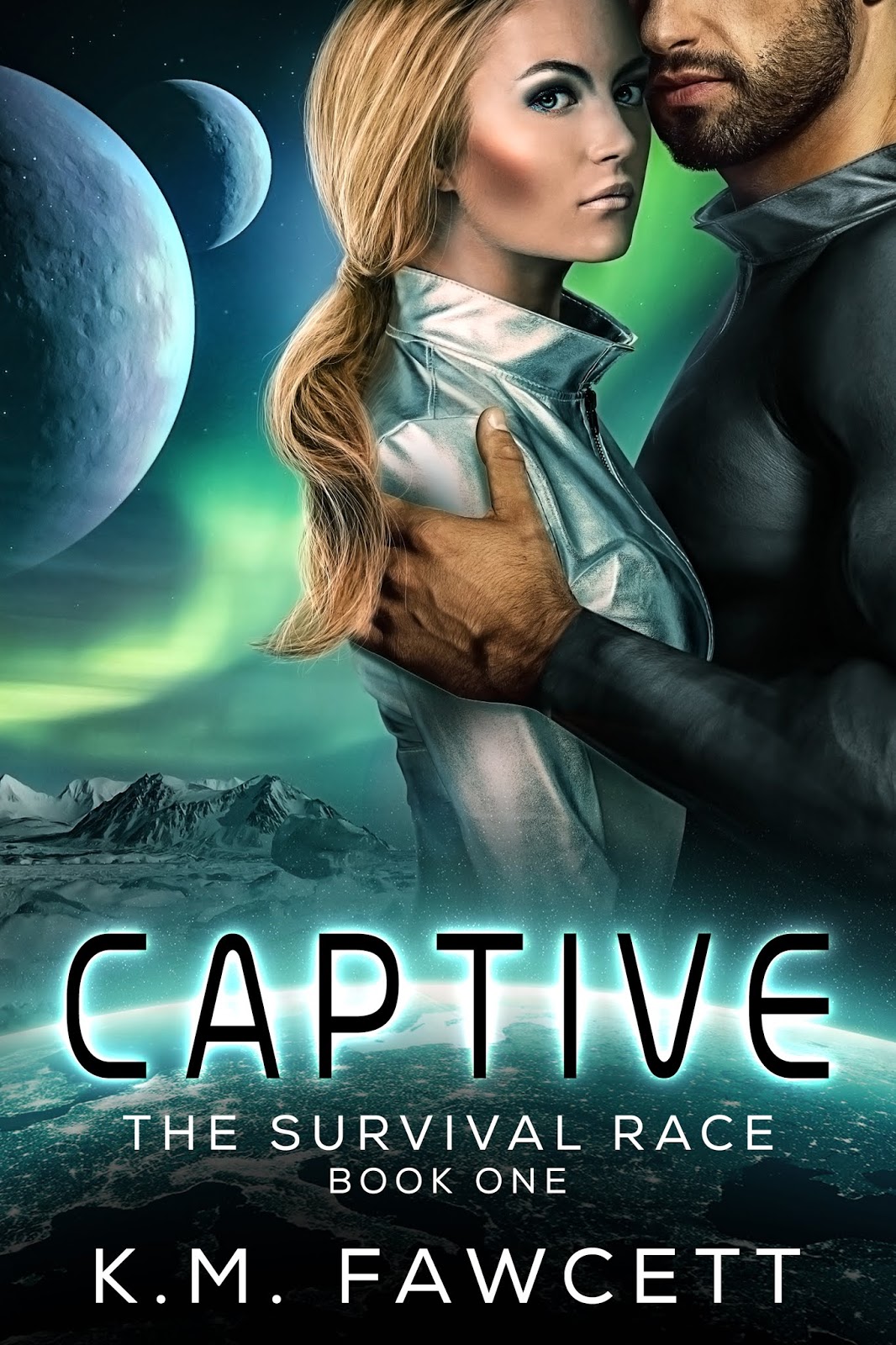
Captive (The Survival Race series book 1)  
A rookie cop and an alpha gladiator band together to escape their alien captors in a chilling race for survival and soon discover freedom isn’t all they desire.

Thursday, August 3, 2017

All that matters is the story (in the first draft, anyway)


I'm in the process of responding to my editor's comments on my latest WIP, and re-learned a lesson I had clearly forgotten. And that is, when it comes down to it all that matters is the story.

I quite often read blog articles about writing. After all, I'm a writer. When I worked in IT I read articles about IT. It's important to keep up with what's happening, and there is always room for improvement.  But there's an important difference. In IT, technology changes rapidly. If you don't keep on top of the wave, it moves on without you. That's not really true of writing. Sure, there are some changes in expectation to take into account. One example is the need for description. In the book Moby Dick apparently Herman Melville went into tedious detail describing a whale – because most readers would not have seen one. That's no longer an issue these days. If you haven't seen a real one, there are plenty of pictures, so too much explanation is tedious and boring

There are changes in reader expectations and taste that may merit consideration. I've heard it said that The Lord of the Rings would not have been published if it had been offered to a publishing house today. Too long, too rambling (Tom Bombadil and the Old Forest) and a bit archaic in style. Readers generally are more accepting of graphic sex. But really, all of that is a nonsense. It's a matter of taste. Many people still don't appreciate erotic stories, or even those with coarse language or blasphemy. But many readers love Charles Dickens, even more love LOTR and even more loved Fifty Shades of Grey

Most writing advice on blogs is about 'how to do it better'. Many of them repeat the dogma everyone else has offered about self-editing, words to watch, avoid adjectives and adverbs etc etc. One blog I read recently was about writing in what's known as 'deep third' – you describe what your point of view character sees and feels so the reader can be involved in the experience. It's the difference between saying something like an example from this blog. There are plenty of others - just google 'deep POV'.

Out of Deep POV
'At last the tremors subsided and the earth stilled. Maggie wondered how bad the earthquake had been. She looked around and saw the deep black gashes in the ground where the pavement of the road had cracked. She knew that it must have been at least a 7.0.'

In Deep POV
'At last the tremors subsided and the earth stilled. How bad had this one been? All around, wide gashes cut into the pavement as though it were soft as flesh. Maggie shivered despite the heat. A 7.0 at least, perhaps even higher.'

The basic idea is to take out the 'filter' words (wondered, looked, knew) and show what Maggie feels to offer description of what's happened.

But you see, it isn't as easy as it looks. I do try to write in this way, but unless you're careful, you can end up confusing your reader (or yourself). In a first draft the most important task is to get the story down. There's time to add the deep POV detail in the second or third draft. And that is what I didn't do. In my draft I spent too much time on method and not enough time on story.Confusing your editor isn't a good look. Sorry, Di.

Now I'm paying the price, fixing up the inevitable plot holes. When I sent it to my editor, I knew in my heart it wasn't really finished. Trust your heart, writers. It KNOWS stuff.

And now for some pictures.

Flying butterfly (because I like taking picture of flying things

A noisy miner bird - a little Aussie honeyeater

What I said earlier

It can get a bit chaotic at afternoon tea time - rainbow lorikeets

Monday, February 8, 2016

Star Wars Storytelling = The Struggle for Balance

Recently I stumbled upon this ScreenRant video that gave a fascinating take on the Star Wars saga. If you want to watch all or part before reading on, take a look. (By the way, the narrator delivers his theory in a normal voice with no gimmicks, sound effects, silliness or outrageous rants, and backs it up with clips and thoughtful commentary on various scenes, which I greatly appreciated!)


Though I'd never looked at the Star Wars saga in quite this way (and will probably never see it quite the same again), I think this theory carries a lot of weight.

And this had me do a lot of thinking about storytelling in general.

In a real universe, things aren't all black or all white--it's all about the struggle for balance. Moderation. Harmony. About the pendulum swinging from one extreme to the other, trying to find the perfect middle ground.

Having peace doesn't mean there's no conflict, only that the conflict is less dramatic and savage than that of war. The struggle is more subdued. The pendulum wants to come to rest at the very center, where the forces are balanced, but it will never happen. Because different people or groups want different things. The pendulum wants to center itself, but a major force will always be exerted that sets it in motion again, swinging from one extreme to the other. That motion creates upheaval and struggle in the universe.

And that's where the story lies.

If the pendulum isn't centered, an individual, based on his philosophies and experiences, is going to view the circumstances as either being bad or good. But that's only one perspective. Those with different beliefs may believe the opposite.

Great epics must be told from one perspective, but that individual--like Anakin, Luke and Kylo Ren--must always struggle with the pull of the opposite force that is attempting to re-attain balance.

In the Hero's Journey model, the hero must always face life-changing choices--and usually must be forced to do the very thing that he has sworn he will never do, or go to the place he has sworn he will never go--because that's what shapes his character and makes him evolve into something greater than he was. That's what the pendulum demands of him.

That which does not kill us, makes us stronger...indeed.

That's why when some sagas flip perspective and show us the so-called villain's POV, it can be so fascinating. It presents a way of looking at the situation we hadn't considered before. It shows us new things, new ideas, and new ways of thinking.

When the "villain's" version is contrasted to the "hero's" version, we begin to understand the total dynamics. Were the Jedi truly forces of good? That's open to debate. They began influencing and molding minds of very young children when they indoctrinated young Padawans into their way of thinking. Some might call that brainwashing. They didn't believe in love or marriage, warning it would lead to the Dark Side. So in that frame, there seemed to be no true good or evil, only the striving for balance. Anakin, Luke and Kylo all struggle with the opposite extreme of the Force from the one that they've chosen.

Every story requires reversals of the pendulum, struggles with the forces at play.

This has given me a new dynamic to consider when crafting a story. I now see how storytelling can be viewed more as a side-to-side motion as forces in the particular universe attempt to restore balance than it is climbing a mountain, which is more how I had envisioned the plot process in the past.

In closing, I'd like to offer another video to take us back to the Star Wars saga. This one presents a fan theory about Rey's true history in Star Wars: The Force Awakens and it seems to further compliment the Struggle for Balance theory. See what you think.


Have a great week!

~~ * ~~

Friday, April 11, 2014

DETERMINATION TURNED NO, NO, NO TO YEAH, YEAH, YEAH!

Four lads from Liverpool--and the man who believed in them.


As writers, we’re all familiar with the struggle to find that one person who believes in us enough to take us on as agent, the wider search to find the editor who loves the book as much as we do, to find the right people to present that book in just the right way to give it wings.  That constant quest for support, for faith, can be at times exhilarating, at times heartbreaking.  It can yield fabulous results—book deals, sales, great reviews, even fame and fortune.  Or it can yield nothing for months, even years, leading to frustration, discouragement and self-doubt.

Anyone who aims to perform an art at a high level—musician or painter, chef or dancer—plods along this uphill road marked by pleasant detours and washed out bridges, smooth pavement and potholes, dizzying peaks and dismal valleys.  The longer she perseveres, the fewer companions she’ll have.  Not everyone has the guts to stick it out, to see what’s around the next bend.  Talent is not enough to propel someone along this road.  You need determination and stubborn will and a kind of blindness to the steep drop-off on either side of you.  

I’m waxing lyrical today not only because I’m feeling lucky, having reached a little resting place along the way, with the prospect of publication of my first book Unchained Memory a reality now (by Ink’d Press, in February, 2015).  I also just finished reading over 800 densely packed pages of Mark Lewisohn’s The Beatles: All These Years, Vol.1, Tune In.  (Yes, that’s 800 pages, and it only covers the Beatles from birth to early 1963, just as they are about to make it big.) The message I came away with was how close we came to never hearing that life-altering sound, how close the world was to losing something phenomenal, because “the powers that be” in music in London just could not perceive what was in front of them.

All of the young men who would become the Beatles knew, practically from the time they first picked up their guitars (or drumsticks), they would become something special.  They felt it, though the circumstances of their birth and education certainly gave them no reason to believe it.  Liverpool was desperately poor after the war, with few jobs to be had and few municipal resources to provide housing or clean up the bombed-out areas.  Only John Lennon’s Aunt Mimi, who raised him, could be said to approach the middle class; for the others, remaining in the working class was a struggle.  

Richard Starkey (Ringo to the rest of us) was so sick as a child and young teenager, he eventually gave up on schooling.  The others barely made it through what we would consider high school.  But the music?  Yeah, that they knew everything about.  Rhythm and blues, rock and roll, country/western, blues, Elvis, Little Richard, the Shirelles, Smokey Robinson and the Miracles, the Coasters, Eddie Cochran, Gene Vincent, Jerry Lee Lewis, Phil and Don Everly—they knew them all, every chord, every note, every nuance of voice.  And when they began to play together as a group—first John, Paul and George with a lesser drummer named Pete Best, then the three of them with the “metronome” that was Ringo, they had a playlist that could last them through the brutal marathon six-hour sets at the sleazy Hamburg nightclubs where they honed their art.

Fans back in Liverpool noticed the difference in them when they returned from Germany the first time.  When they returned the second time, and the third, they were so far above the local competition, it was as if they were playing in another league.  They had changed their hairstyle, giving up the greased-up Fifities look for something more . . . well, the only way Liverpudlians could describe it was “Continental”.  They wore black leather.  Chicks dug it.  They had a regular gig lunchtimes and nights at the Cavern, a converted underground warehouse that dripped sweat off the walls when packed with fans of the group, which was anytime they played now.

That’s where Brian Epstein saw them.  Brian was owner of NEMS Enterprises, a business consisting of two large record stores that had grown out of his family’s traditional furniture business.  He was the restless type, always looking for some new challenge for his energy and his intellect, and the record stores, although hugely successful, had just about run their course for him.  They did serve a singular, wonderful purpose, however.

Brian had a policy that if anyone requested a particular record, he would order not just a copy for the requester, but several more as well, thinking that anyone who requested a record was a kind of harbinger of sales.  Someone had come in requesting a copy of “My Bonnie” by Tony Sheridan and the Beat Boys.  He duly ordered it—and sold out.  He ordered more.  And sold those, too.  When informed that the “Beat Boys” were in fact the Beatles, a group really pulling them in down at the Cavern, he went to see for himself what the fuss was all about.

It was love at first sight.  Here was what he’d been looking for, the outlet for all his creative energy.  He was going to make these boys bigger than Elvis.  That suited the Beatles just fine, since they had always believed they’d one day be as big as Elvis (even John Lennon wouldn’t presume to be bigger). Within weeks they’d signed a contract for Brian to manage the Beatles, and he went to work.

This is where the story began to resonate with me.  Things were going great for the boys and for Brian until Brian hit a wall trying to get anyone in the music industry to listen to him.  I have this terrific band—they even write their own songs!—have a listen! Everywhere he went, the doors slammed in his face, not because the Beatles weren’t good—in most cases, the A&R men wouldn’t even give them a chance to audition—but because they were from Liverpool, or because they played electric guitars (“guitar groups aren’t popular!”), or simply because their name was odd (“Beatles? What kind of name is that???”)  The prevailing paradigm was for solo singers (this was the day of “teen heartthrobs” like Paul Anka or Neil Sedaka, remember), not groups (only Motown and Tamla in the U.S. were selling that kind of music).  The answer was no, no, NO!

So, even though Brian’s Beatles were getting plenty of gigs in the North of England for more money than ever before, even though they had a huge fanbase in their own hometown, he couldn’t get the establishment to get behind them.  (Does any of this sound familiar?) 

It would be nice to say at this point that George Martin at Parlephone Records heard the demo tape and instantly got on board, signing the Beatles to a recording contract, producing their first hit, “Love Me Do”, and becoming another huge fan of “the boys”.  It is true that George did eventually do all of that, but it wasn’t his first thought, or his idea.  He wasn’t impressed with them at first hearing, and initially said no.  Only some behind-the-scenes maneuvering within the recording giant EMI, having to do with internal politics, forced George to make the move that would forever tie him to the Beatles’ fortunes.  It may have been a marriage of convenience, but the two parties (and Brian, too) quickly grew to love each other.  Fate?  Or just plain stubborn will?

The lesson to be learned here is that everyone, no matter how talented, no matter how far they will eventually go, no matter what huge impact they will eventually have on the world, will meet obstacles on the way, potholes, bridges washed out, detours.  John Lennon, Paul McCartney, George Harrison, Ringo Starr, Brian Epstein refused to give up and drop off the road, no matter how many times they heard “No!”.  Likewise, J.K Rowling, Stephen King, Diana Gabaldon, Sherrilyn Kenyon, Jayne Ann Krentz didn’t give up when people told them no, even though it must have seemed no one would ever say yes. 

Maybe they’re just stubborn.  And, no doubt about it, that’s a good thing.

*A special word of thanks to my own personal “Brian”, my agent, Michelle Johnson, founder of Inklings Literary Agency, who has stubbornly endured her share of slammed doors on my behalf!  Thank you for believing in me, Michelle!

Cheers, Donna