
Showing posts with label space travel. Show all posts

Thursday, February 24, 2022

Can faster than light travel really happen?


A star field peppered with galaxies

The James Webb telescope is out there, starting its mission to collect light from the the universe's earliest beginnings, eighteen billion years ago. That's a long, long time and brings to mind the vast, unimaginable size of the universe and the distances between suns in a galaxy, let alone between the galaxies themselves. And that inevitably leads to discussion about space travel in fiction. Because, let's face it, without relatively fast space travel, space opera would not exist.

Indeed, the existence of Faster Than Light travel (FTL) is apparently seen as fantasy by the hard SF purists. Sure, that's true at the moment. But let me conjure up the ghost of Carl Sagan doing the 1980s Cosmos. Just a sec...

<Clears throat>

Come with me on a cosmic journey. We’ll start here, on dear old Mother Earth, the only planet we know a huge amount about. Journey back in time, four hundred years…
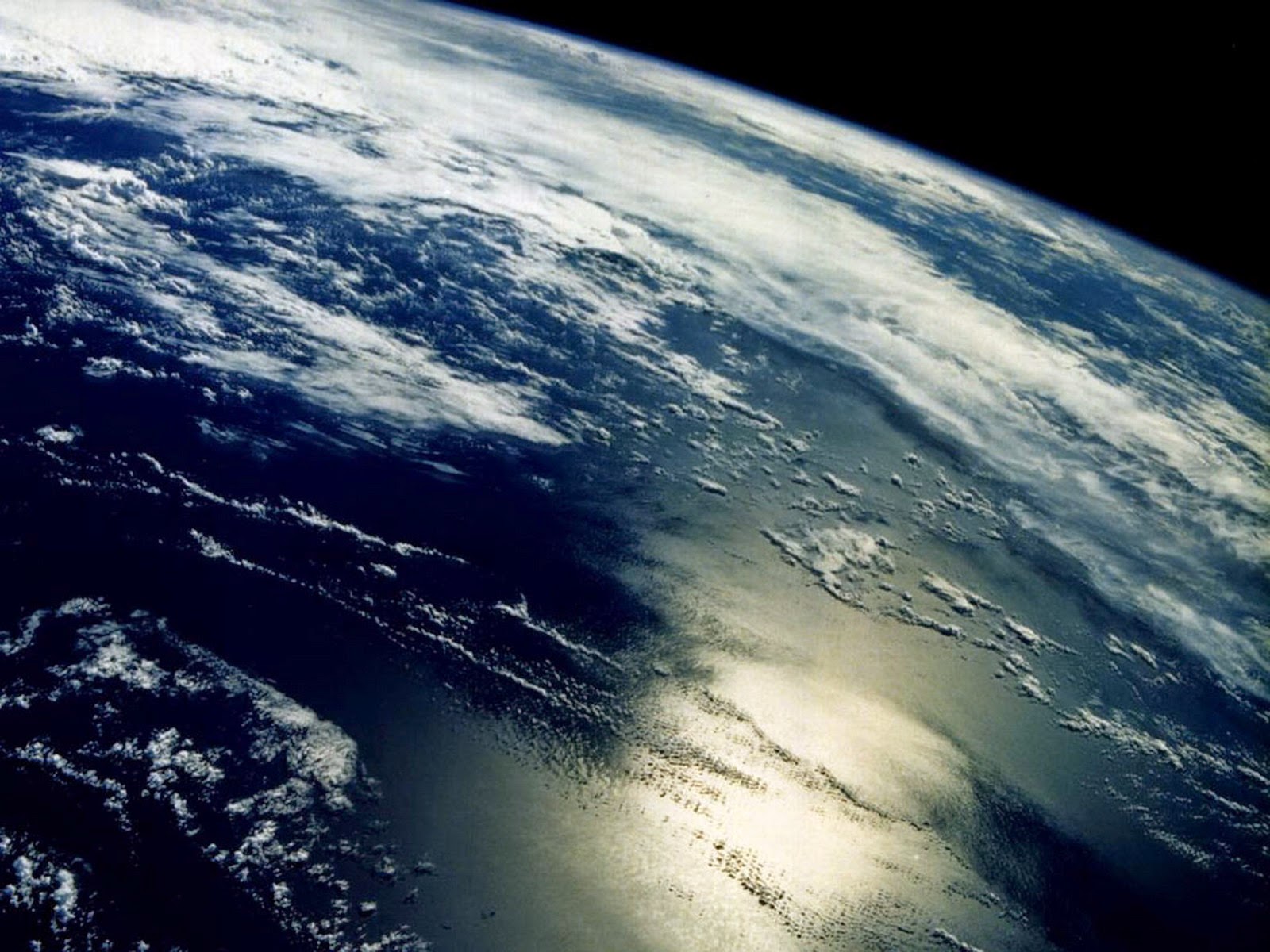

The world was beginning to open up. Intrepid explorers travelled to the other side of the Earth in search of trade and riches. Dutch merchant ships sailed from Amsterdam to what is now Jakarta in Indonesia to trade in spices. At the turn of the 17th century, they sailed down the west coast of Africa, re-provisioned at Table Bay and then set off past Madagascar and across the Indian Ocean up to Java. Makes sense, really, if you look at the journey on a map; down to the tip of Africa, then up at an angle to Indonesia. The journey took a year, sometimes as much as eighteen months if the winds were poor or the storms struck hard.

Then in 1610 Henrik Brouwer did something completely counter-intuitive and sailed south from Table Bay. Makes no sense, does it? Well, yes it does. The Earth is not a 2D Mercator’s projection on a tabletop, it’s a spheroid. The distance around the equator is greater than the distance around the lines we call ‘latitude’ to the north and south. Brouwer took advantage of that fact to shorten the distance he had to travel east and had the bonus of the reliable winds of the ‘roaring forties’ to push his ships along. All he had to do was remember to turn left when he reached the longitude for the Sunda Strait, sail up the coast of Western Australia and he was home. Taking this route shortened the journey by two thousand miles and more than halved the duration.

Over the years, sea travel became faster and more reliable. Steam and then diesel replaced sail. When my family migrated to Australia from Amsterdam the sea journey took about a month. Apart from the improved mode of transport, the ship also avoided the long journey around the Cape of Good Hope by going through a short cut – the Suez Canal.

Eventually, the obstacles forced upon us by oceans and continents were removed, too, with the advent of air travel. These days you can get on a jet at Schiphol in Amsterdam and get off twenty four hours laterat Perth International Airport. With airliners like the beautiful and now-departed Concord, you could do the journey in half the time. A trip from Amsterdam to Perth in a Concord would be around twelve hours. Half a day. That's pretty spectacular isn't it? But now there's the Sabre engine, which can operate in both atmosphere and vacuum, and can travel at 5 times the speed of sound. Such an aircraft could make the trip from Sydney to London in four hours. That’s 4 hours. Not bad, eh? But wait – there's steak knives! A spaceliner can do the trip in 90 minutes!!!

So we’ve come down from 350 days, to 1 month, to 1 day, to 1.5 hours. Rams the point home, doesn’t it? Please note also that the improvements are coming ever more quickly as we develop technology.

Still with me? Trust me, it’s all relevant to space travel.

Imagine what reaction a person would have received if, in 1600, she’d said that in four hundred years, we’d be able to travel from Amsterdam to that southern continent we didn’t know anything about, in an hour and a half.

Yes, but that’s just the Earth, I hear you say. We’re talking inter-stellar distances. For Pete’s sake, the nearest star system from ours is over 4 light years away.

Very true.

We have no way of spanning these vast distances in anybody’s lifetime. Regardless, the notion of ‘hyperspace’ in science fiction to allow for the possibility of space travel has been around for a long time. The Grand Master, Isaac Asimov, did rather a lot of planet-hopping. Have a look at his ‘Foundation’ series. Many of the more modern writers like Mc Devitt and Moon have FTL travel but show it as still a very time-consuming business with journeys taking weeks or months. Star Trek used warp drive, which was just a made-up thing, and also matter transfer (as does Linnea Sinclair) and others have portals for almost instant travel. Jack Mc Devitt in his book ‘A Talent for War’ postulated a quantum drive, where a ship moves from one place to another instantaneously. Worm holes would also allow for an instantaneous transfer the movie Interstellar is an example.

But now, there are murmurings that Star Trek's famous warp drive may not be as SF as we thought. This article in The Conversation talks about warp drives and how they would work.  And advances are being made in matter transfer, and although quantum tech is still in its infancy, the potential is there.

In my space opera novels I refer to my version of hyperspace as ‘shift space’. I’ve done that deliberately because in my universe the ships use the geometry of extra dimensions to get around. Ships ‘shift’ to another dimension for the duration of a journey.

It’s pretty much accepted that our 3D notion of the universe is just a perception, that there are many other dimensions we are not equipped to see. Such an understanding certainly helps to explain the apparent complexities of quantum physics and the anomalous behaviour of sub-atomic particles. Way back in the 1980’s Carl Sagan in his wonderful TV series ‘Cosmos’ showed us a tesseract, a four-dimensional object portrayed as best we could in a 3D world. To understand what you’re looking at, think about a standard, 2D drawing of a cube. According to mathematics, there are many, many more than four dimensions out there, not to mention parallel universes.

The biggest limitation imposed upon us in reaching a real understanding of things like this is that we are constrained by our own world view and our ability to perceive. As far back as 1884 E.A. Abbott in his book ‘Flatland’ described the problems of seeing three dimensions in a 2D world. We are faced with the same thing, on a 3D scale, if we attempt to visualise four, five or six dimensions. Or many, many more.

However, I can give you some sort of idea of where I’m coming from. Take a piece of A4 paper. Let’s label two diagonally opposite corners as A and B. Starting from B, we can reach A by going straight up one side then along the top to A. Hang on, you say, wouldn’t you just go across the diagonal, thereby reducing the distance and time taken? Sure you would. Now curl the paper over into a cylinder. All you have to do to get from B to A is move along a straight line. The length of the line will depend on how you make the roll (short edges together or long edges together).

Now take point A in one hand and point B in the other and bring them together so they meet. Getting from B to A in this instance is like walking from one room into another.

That’s my notion of ‘shift drive’. I have included some duration in the journey in the book because I found it useful. Don’t ask me how the shift drive (the engine that makes it possible to take advantage of the geometry) works. I’m speculating a fusion drive to do something or other. When I work it out, I’ll let you know.

But technology moves at a gallop and as more and more corporations and governments jostle for a place in the space race, you can bet there are scientists trying to find an advantage. 

In fact, here's one that's happening right now. NASA and China are both planning manned missions to Mars. Using current technology, it would take six to nine months to transit from Earth to Mars. But using lasers to heat hydrogen fuel, transit times to Mars could be reduced to just 45 days! Read all about it in Scitech Daily.

So watch this space, folks. There may well be FTL in the foreseeable future.

Monday, August 31, 2020

Coming Soon: First Woman on the Moon!

Happy last day of August! With all the happenings over the last few months, most of them traumatizing, I'm unsure whether to think "August, so soon?" or "August! At last!" Let's hope the last five months of 2020 turn out to be a little more user friendly, deal?  :)

On to my blog topic.

As science fiction romance authors creating fictional universes, women in space is hardly a new concept. It's pretty much business as usual for those of us who travel the stars in our imaginations. 

But that hasn't been the case in the real world. 

In the late 1960s and early 1970s, a total of 12 men walked on the moon. No women, of course, considering this was the era of "manned missions" and "men in space" and "one small step for Man." No, the women in this era were busy behind the scenes doing the math calculations that would get the male astronauts there--and back again--safely. 

But this is the 2020s and times and attitudes have changed drastically since those early days in another era. Now women are regularly included on space mission crews. (In fact, the accepted language is now "crewed missions" rather than "manned mission," something I strive to include in my SFRs.)

Still, as of a source article dated August of 2019, only 64 of the 566 people who have flown in space have been women. Clearly, there's still some serious ground to be made up, and NASA's Artemis Program is planning to do just that.

As we re-set our sites on the Moon decades later, it's clear that the first Moon landing in over 40 years is going to include at least one woman.

What do we know about the selection process?

NASA administrator Jim Bridenstine has said that the first woman to walk on the Moon will be someone in the current astronaut corps who has worked aboard the International Space Station or ISS. 

Of the 12 women serving as of 2019, not all had flown into space yet, but the good news is there are more women in the  astronaut training pipeline. In fact, the latest graduating class has a 45/55 percent ratio (5 women, 7 men).

Thanks to President Trump's Space Policy Directive 1 signed in 2017, there's a renewed interest in returning to the Moon and to space exploration, and with it, a larger role for women in space. 

By 2024--less than 3-1/2 years from now!--when Artemis is planning to conduct it's first Moon landing, there could be many more females in the astronaut program training for future missions on the Moon, Mars and far, far beyond. 

Maybe our science fiction romances aren't so far-fetched after all.

Have a great week!


Sources for this blog:

NASA Artemis Program  ( https://www.space.com/artemis-program.html )

Space.Com: Who Will be the First Woman on the Moon 

Statistic: Number of Female Astronauts Rising

President Trump's Space Policy Directive 1

Thursday, November 10, 2016

How do you leave breadcrumbs in space?


One of the givens in any space opera is the ability to move through space (relatively) quickly from one place to another. Some people use worm holes. Others use plain old hyperspace. In the Star Wars universe moving from one star system seems to be a bit like driving your car across town. Sometimes stories are written about generation ships which travel through normal spacetime over incredibly long time frames.

That's all well and good. But there aren't any roads in space. Of course, all those ships transporting people around have wonderful navigation systems. The issue, though, is that distance and direction on planet Earth are all based on constants. Locations on the surface have precise coordinates, given in latitude and longitude. Latitude is based on the distance north of south from the equator, and longitude is based on the distance east or west from a given base line (0) which we humans have decided passes through Greenwich in the UK. In the past, longitude was found to be exceptionally difficult to measure. It wasn't until the invention of extremely accurate clocks that we could get it pretty right. To quote Wikipedia "Longitude at a point may be determined by calculating the time difference between that at its location and Coordinated Universal Time (UTC)." It's an over-simplification, but we don't need more than that for this discussion.

The point is that in order to navigate between two places, you need to know the position of those two places based on two 'knowns' – your start point, and your end point. Sure, you can recalculate en route. Aircraft do it all the time, because they work in three dimensions: latitude, longitude and height. I assume submarines do, too. If we look at space, working out how to get to other planets has already been done successfully many times. But the further we go, the harder it gets. This io9 article explains it better than I could.

So why do I care? Because my current WIP is very much about following a specific journey made by space-farers in the distant past. There aren't any roads, so I need breadcrumbs, or a ball of string, and I'm not sure how to make it work.

Ah well. That's one of the joys – and the frustrations – of writing science fiction.

Thursday, July 16, 2015

Ordering pizza from Pluto

Like everyone else even remotely interested in space, the Universe and everything, the close encounter with Pluto has my mind completely boggled. Water ice? On Pluto? That is going to have huge ramifications. I'm all agog waiting for  the scientists to produce their theories which may well have implications on the development of life on Earth.

Since I'm not a scientist, I'll wait and see. But the encounter with Pluto does raise another point, often ignored in science fiction. It takes over four hours for data to transmit from the New Horizons ship back to Earth. Let's extrapolate on that. Imagine you're a crew member on the New Horizons ship and you have an attack of the munchies. You ring Earth, a copy of the Domino's flyer from ten years ago in your hand.

“Hi, I’d like to order the peperoni, please. With anchovies, no pineapple.” (Wait nine hours)
“Sure. Would you like garlic bread with that?”
I think your pizza might be cold before it was delivered.

Real time conversations are even more of a problem in space opera if you’re planet hopping. If light can take years to go from one star to us, how long would it take any other type of signal? (We’ll leave out sound waves, which don’t move through a vacuum.) Answer – same as light. About 300,000km per second. Sure, that’s fast. But having a conversation with someone, say, four light years away is going to be a tad tedious.

And yet, so often space opera ignores this fact of physics and has folks chatting from spaceship to planet, or planet to planet, as though they were using Skype back in the 21st Century on jolly old Earth. A case in point is the famous scene in The Empire Strikes Back, where Darth Vader’s Executor is chasing the Millenium Falcon through an asteroid field. Admiral Piett was delighted to be able to tell Vader the Emperor was on the line, so the star destroyer could be moved out of the asteroid field in order to send a clear signal. And then they had the little chat, the Emperor’s ominous figure dwarfing Vader, down on one knee, while he plotted betrayal.

Now, let’s think about this. The Emperor is on Coruscant, Executor is down in the Imperial boondocks, messing around near Hoth. I’m not suggesting the exchange was impossible. No, let’s put that another way. It’s impossible without some sort of futuristic device. Even within our own solar system, it takes anywhere from 3.4 – 21 minutes (depending on how close the planets are to each other) for a a signal to go from Mars to Earth.

It’s a known problem, though. Ursula Le Guin was the first to dream up a device which could enable people on different planets to converse in real time. She called it the ansible. The name has wheedled its way into the genre, rather like ‘hyperspace’. Elizabeth Moon wrote a whole series of books (the Vatta saga) around a company which specialised in setting up ansibles in orbit around inhabited planets, and maintaining them. And the subsequent danger when the ansibles were sabotaged, a bit like taking down the telegraph line across America in the Old West.

I don’t call them ansibles, but since my books involve much planet-hopping, I had to come up with something, which I suppose is an ansible by any other name. A multi-dim transmitter is a device which uses one of the many dimensions of space, a dimension which is not available to physical entities like ships, to transmit a signal from one place to another. They can be fitted to ships, but they are expensive.  Needless to say, if you don’t have access to an ansible or its equivalent, you can’t have a real-time conversation over a long distance.

What ways have you seen for getting around this limitation? Or is it simply ignored?

Thursday, July 9, 2015

Let's hide the task force in a nebula!

I was killing some time the other day, having just managed to get into the Netflix service. I was hoping to see some of Star Wars: Rebels - but not in Australia, it seems. However, I did find Star Wars: the Clone Wars. So I watched a few episodes. They're fun, showing Count Dooku and General Grievous going head-to-head with the Jedi.

But one episode made me smile. The Jedi ships came out of hyperspace on the edge of a nebula, the plan being to sneak up on Grievous's flagship (on the other side of the nebula) without being noticed. There are two things a little bit dodgy about that.

The images in the cartoon showed the ships moving through a thick mist that looked a bit like the colour-enhanced image of Orion above. The reality is a bit different. If you look at the Orion nebula through a telescope it looks like a white mist. But surely the nebula would look very different up closer? Er, no. The nebula will look larger, meaning the light is dispersed over a larger area. This explains it rather well. So rather than sneaking up through a pea soup fog, the ships wouldn't even be going through a thin mist. #Fail.

But that's not all. So we come out of light speed at the edge of the nebula, right? Planning to take a shortcut through the billowing clouds. Well... nebulae are not localised patches of mist. Or at least, they are, for a given meaning of localised. As a ferinstance, the Orion nebula is 24 light years across. And it isn't even a big one. Assuming Grievous's flagship is on one side of the nebula and the Jedi force is on the other, the "shortcut" is going to take an awfully long time in normal space.

Hey - it's fiction. We all know Star Wars ships behave in vacuum the same way they would in atmosphere, don't we? But the reason I smiled when I watched the episode is because I knew those facts, having researched nebulae for a book I was writing at the time.

Gosh. Is there an elephant in this room?

However... the Universe is a remarkable place. You have only to look at the mind-boggling diversity we have already found in exo-planets. So perhaps, somewhere out there, we'll find tiny, dense nebulae as thick as a London fog that will hide strike forces. Who knows?

Friday, April 24, 2015

CHASING THE FUTURE: TECH AND SFR


As writers of science fiction romance it’s our job to envision the future and the technology that will make that future possible. How will we get around? What gadgets will make our lives easier—or more complex? What aspects of technology will threaten our privacy or freedom or humanity or survival?

Those kinds of questions about the nature and limits of technology are a huge part of the fun of writing SFR.  They are also a huge part of the challenge. Because in this age of tremendous technological growth and change, we no sooner construct an elaborate world full of shiny tech toys than some garage genius has actually made it happen. Staying ahead of the tech game means running full out all the time.

Just take a look at Greta’s post on interstellar travel. A few years back, actually traveling to the stars via warp drive or hyperdrive or jumping into a wormhole or whatever seemed impossibly out of reach. Now, researchers are closing in on the theoretical foundations for these crazy star-hopping ideas. 

As few as ten or fifteen years ago, you could find plenty of reputable scientists to say that Earth could be the only planet capable of sustaining life in the galaxy. Then more powerful telescopes and better analytics allowed us to find the first planet in that “Goldilocks” zone just far enough and not too far from its parent star to allow the possibility of liquid water (thus life as we know it). Then we found more planets. And more. Now everyone agrees: there must be millions of Earth-like planets out there. New technology has allowed us to recognize a new truth.

I’m not that old, but in my lifetime, I’ve seen computers go from the size of a room, storing data on reels of metal tape, to the size of an iPod or watch, storing data in a chip the size of a baby’s fingernail. We’ve sent manned teams to the moon and back and established a permanent presence in orbit around the Earth. We’ve sent probes to Mars and out into the solar system and down into the depths of the oceans. We’ve made Captain Kirk’s communicator and Dr. McCoy’s medical scanner everyday realities. And don’t even get me started on movies and television!

Some of these things were predicted by SF writers, many were not. Strangely, it seems the less bound by the “rules” of prevailing science the writers were, the more accurate they were in their predictions. The STAR TREK Original Series writers, creating without much concern for how stuff really worked, were a gold mine of future technology simply because they inspired young tech nerds to invent what they saw on screen. (The inventor of the cell phone and the researchers working on warp drive have all admitted that TREK was their inspiration.) Writers of the Golden Age of science fiction took us to outer space without a thought as to how we got there. Their readers took us to the moon with the U.S. space program.

Like Greta, I don’t worry too much about whether the system I choose for interstellar travel (and communication and a dozen other things) works given current scientific knowledge. I take pains to make sure it is internally consistent and logical, given the science I have posited for the world I have created. Who knows? One day that world may exist.  And wouldn’t that be fun?

HAPPY 25th BIRTHDAY, HUBBLE!

Speaking of technologies that changed our view of the universe—25 years ago, a new kind of telescope was assembled in orbit, beyond the interference of our atmosphere. The Hubble Space Telescope has treated us to some spectacular images over the years, as well as quite a few startling discoveries. Enjoy these images from the Hubble, courtesy of NASA!


Cheers, Donna

Thursday, April 23, 2015

Inter-stellar travel. Science Fantasy?


There's been a bit of discussion of late about the vast, unimaginable size of the universe and the distances between suns in a galaxy, let alone between the galaxies themselves. And that inevitably leads to discussion about space travel in fiction. Because, let's face it, without relatively fast space travel, space opera would not exist.
Indeed, the existence of Faster Than Light travel (FTL) is apparently seen as fantasy by the hard SF purists. Sure, that's true at the moment. But let me conjure up the ghost of Carl Sagan doing the 1980s Cosmos. Just a sec...

<Clears throat>

Come with me on a cosmic journey. We’ll start here, on dear old Mother Earth, the only planet we know a huge amount about. Journey back in time, four hundred years…

The world was beginning to open up. Intrepid explorers travelled to the other side of the Earth in search of trade and riches. Dutch merchant ships sailed from Amsterdam to what is now Jakarta in Indonesia to trade in spices. At the turn of the 17th century, they sailed down the west coast of Africa, re-provisioned at Table Bay and then set off past Madagascar and across the Indian Ocean up to Java. Makes sense, really, if you look at the journey on a map; down to the tip of Africa, then up at an angle to Indonesia. The journey took a year, sometimes as much as eighteen months if the winds were poor or the storms struck hard.

Then in 1610 Henrik Brouwer did something completely counter-intuitive and sailed south from Table Bay. Makes no sense, does it? Well, yes it does. The Earth is not a 2D Mercator’s projection on a tabletop, it’s a spheroid. The distance around the equator is greater than the distance around the lines we call ‘latitude’ to the north and south. Brouwer took advantage of that fact to shorten the distance he had to travel east and had the bonus of the reliable winds of the ‘roaring forties’ to push his ships along. All he had to do was remember to turn left when he reached the longitude for the Sunda Strait, sail up the coast of Western Australia and he was home. Taking this route shortened the journey by two thousand miles and more than halved the duration.

Over the years, sea travel became faster and more reliable. Steam and then diesel replaced sail. When my family migrated to Australia from Amsterdam the sea journey took about a month. Apart from the improved mode of transport, the ship also avoided the long journey around the Cape of Good Hope by going through a short cut – the Suez Canal.

Eventually, the obstacles forced upon us by oceans and continents were removed, too, with the advent of air travel. These days you can get on a jet at Schiphol in Amsterdam and get off twenty four hours laterat Perth International Airport. With airliners like the beautiful and now-departed Concord, you could do the journey in half the time. A trip from Amsterdam to Perth in a Concord would be around twelve hours. Half a day. That's pretty spectacular isn't it? But now there's the Sabre engine, which can operate in both atmosphere and vacuum, and can travel at 5 times the speed of sound. Such an aircraft could make the trip from Sydney to London in four hours. That’s 4 hours. Not bad, eh? But wait – there's steak knives! A spaceliner which will do the trip in 90 minutes!!!

So we’ve come down from 350 days, to 1 month, to 1 day, to 1.5 hours. Rams the point home, doesn’t it? Please note also that the improvements are coming ever more quickly as we develop technology.

Still with me? Trust me, it’s all relevant to space travel.

Imagine what reaction a person would have received if, in 1600, she’d said that in four hundred years, we’d be able to travel from Amsterdam to that southern continent we didn’t know anything about, in an hour and a half.

Yes, but that’s just the Earth, I hear you say. We’re talking inter-stellar distances. For Pete’s sake, the nearest star system from ours is over 4 light years away.

Very true.

We have no way of spanning these vast distances in anybody’s lifetime. Regardless, the notion of ‘hyperspace’ in science fiction to allow for the possibility of space travel has been around for a long time. The Grand Master, Isaac Asimov, did rather a lot of planet-hopping. Have a look at his ‘Foundation’ series. Many of the more modern writers like Mc Devitt and Moon have FTL travel but show it as still a very time-consuming business with journeys taking weeks or months. Star Trek used warp drive, which was just a made-up thing, and also matter transfer (as does Linnea Sinclair) and others have portals for almost instant travel. Jack Mc Devitt in his book ‘A Talent for War’ postulated a quantum drive, where a ship moves from one place to another instantaneously. Worm holes would also allow for an instantaneous transfer.

But now, there are murmurings that warp drive might be an actually thing. And advances are being made in matter transfer, and although quantum tech is still in its infancy, the potential is there.

In my space opera novels I refer to my version of hyperspace as ‘shift space’. I’ve done that deliberately because in my universe the ships use the geometry of extra dimensions to get around. Ships ‘shift’ to another dimension for the duration of a journey.

It’s pretty much accepted that our 3D notion of the universe is just a perception, that there are many other dimensions we are not equipped to see. Such an understanding certainly helps to explain the apparent complexities of quantum physics and the anomalous behaviour of sub-atomic particles. Way back in the 1980’s Carl Sagan in his wonderful TV series ‘Cosmos’ showed us a tesseract, a four-dimensional object portrayed as best we could in a 3D world. To understand what you’re looking at, think about a standard, 2D drawing of a cube. According to mathematics, there are many, many more than four dimensions out there, not to mention parallel universes.

The biggest limitation imposed upon us in reaching a real understanding of things like this is that we are constrained by our own world view and our ability to perceive. As far back as 1884 E.A. Abbott in his book ‘Flatland’ described the problems of seeing three dimensions in a 2D world. We are faced with the same thing, on a 3D scale, if we attempt to visualise four, five or six dimensions. Or many, many more.

However, I can give you some sort of idea of where I’m coming from. Take a piece of A4 paper. Let’s label two diagonally opposite corners as A and B. Starting from B, we can reach A by going straight up one side then along the top to A. Hang on, you say, wouldn’t you just go across the diagonal, thereby reducing the distance and time taken? Sure you would. Now curl the paper over into a cylinder. All you have to do to get from B to A is move along a straight line. The length of the line will depend on how you make the roll (short edges together or long edges together).

Now take point A in one hand and point B in the other and bring them together so they meet. Getting from B to A in this instance is like walking from one room into another.

That’s my notion of ‘shift drive’. I have included some duration in the journey in the book because I found it useful. Don’t ask me how the shift drive (the engine that makes it possible to take advantage of the geometry) works. I’m speculating a fusion drive to do something or other. When I work it out, I’ll let you know.

* This article is based on one I posted on my own blog several years ago. I've updated it a little to take account of new advances in technology. I reckon it will be out of date again very shortly.