Showing posts with label writing craft. Show all posts

Friday, September 17, 2021

TAXING KING OF PAIN DRAFT NEARS 'THE END'

After much longer than usual, I’m finally approaching the end of my working draft of King of Pain: Interstellar Rescue Series Book Five. The story of Thrane Hunter-turned-Rescue agent Trevyn Dar and shapeshifter Lael Saphora was a tough one to craft during a worldwide pandemic—for a lot of reasons—and it will need plenty of revision. But at least I’ll soon be able to put a tentative “The End” to the first draft. Hallelujah!

Why has this book, which will probably be the final novel in my Interstellar Rescue series, been such a bear to write? Well, I don’t think I’m the only author who has struggled during the pandemic to focus on my work. Even well-known professionals have noted how difficult it’s been to write while the world burns. (The pandemic isn’t the only disaster we’re dealing with, after all.) Fiction, like other forms of creativity, requires emotional space, which is pretty hard to come by when you’re busy thinking about lockdown, full ICUs, politics, climate change, wildfires, hurricanes, floods and all the rest of it. I’d like to think of my work as an escape to another world, but it just doesn’t work that way.

Then, too, I set myself a major challenge in several ways with this particular story. For the first time, I set the story on an alien planet, rather than on Earth or in space. Thrane is the home planet of the humanoid telepathic species I’ve introduced in previous novels, so I had a head start on developing the alien culture. Still, I’m more comfortable here on terra firma or on a starship.

My hero, Trevyn, was a good bad guy in Book Two of the series, Trouble in Mind. The alien half-brother of the hero of that book, Gabriel, he suffered under the abuse of his brutal older sibling, Kinnian, until he broke free and helped Gabriel kill Kinnian and save the heroine, Lana.

So, Trevyn is not your usual kind of alpha male hero. He’s carrying more than the normal amount of baggage—guilt, self-loathing, a fear of his family’s inherited darkness. The challenge for me as a writer is to help him carry that load without crippling his confidence. He still has to kick some serious ass, after all, and fight the good fight, too. He made a start on transforming from a bad guy to a good guy in Trouble in Mind. But in King of Pain, Trevyn finally has to overcome his past and rise above it, not just at the end of the novel, but throughout, so we can love him as the romantic hero.

My heroine, Lael, is a snowcat shapeshifter.

My heroine, Lael, too, is a challenge. I’ve never written a shapeshifting character before, though I’ve read plenty of books featuring shapeshifters. (Nalini Singh’s Psy-Changling series is one of my favorites.) I wanted to make sure to be consistent with the features of the Hinarr culture Lael comes from, the details of shifting (like, what happens with clothes and weapons?) and so on. What aspects of her character transfer to her snowcat Companion? And, how, exactly, do you translate the thinking process of a sentient, but non-speaking, creature, like the Companion, without making it sound like a Disney nature voiceover?

There will be pay-offs, of course. These two are meant to be together, like all my Interstellar Rescue couples. They meet the criteria for fated lovers, enemies to lovers and even a kind of Romeo and Juliet-type story, though with a happy ending. Trevyn and Lael are just making me work for their Happy Ever After!

In fact, they have enough problems of their own, you wouldn’t think they would need a villain to make their book life difficult. But, no, every hero and heroine need a good villain (or two). King of Pain has been a challenge in this way, too, because it started from a Big Idea. (Science fiction as a genre suffers from this problem—the concepts, or the technology, often overshadow the characters.) My Big Idea had to do with the telepathic Thranes who rule the planet and the shapeshifting Hinarr, a severely oppressed minority who lack telepathic skills. The Thranes call them “Ghosts,” due to their lack of telepathy, and consider them mentally deficient. They believe the Hinarr are inferior, useful only for menial labor, and a legitimate prey for hunting in their snowcat form.

The Hinarr, however, are no longer content to play the role of the downtrodden of Thrane. They are fighting back via an underground resistance movement, the Uprising, of which Lael is a leader.

This makes for great conflict, but only in a general way. Just like STAR WAR’s Empire needs Darth Vader, my Ruling Houses of Thrane (and the murderous Blood Legion behind them) need an actual person to embody their evil intent. That person should have goals in opposition to those of my hero and heroine. He (it happens to be a he) should have a clear motivation beyond just “power” or “hatred of the Hinarr.” Given those things, the conflict between my central characters will arise naturally.

So, yes, the Primary Ruler of Thrane, Mennon, is one villain of the book, as is a Brother of the Blood Legion named Avet Van-Del, who hunts Trevyn and Lael through most of the novel. But, as I’ve discovered in the act of writing, the biggest villain, the one who should receive the most attention, is the one pulling the strings of these lesser bad guys. And, as some critics of my last book have pointed out, when it comes time for this villain’s demise, I really have to beat him flat. My readers need the satisfaction of seeing that bad guy get his just deserts.

So, you see, I have lots to work on in the next few weeks. And that’s not even accounting for finding the right images for the cover. Or honing the dang blurb. Oy! Wish me luck!

Cheers, Donna


Friday, January 29, 2021

BUILDING CHARACTER – Bringing People (And Aliens) to Life Through Words - Part 3

In Part 1of my Building Character blog posts, we discussed how a character’s unique traits will determine how they react to anything and everything in the story. I gave a list of 14 things that make a character unique. You can read that post here. In Part 2, we dove deeper into three of them: experiences, perspective, and beliefs. You can read that post here. In Part 3, let’s discuss the unique ways our characters can sense their world.  

SENSING THE WORLD

Whether on Earth, another planet, or in a spaceship, your characters will sense their worlds differently. Everyone is familiar with the five basic senses of vision, hearing, smell, taste and touch. But did you know there are other senses?  

Proprioception is the perception or awareness of the position and movement of the body. Dancers and athletes can be very in tune with where their body is in space.

Intuition is the ability to know something without any proof. It’s sometimes referred to as a “gut feeling,” “instinct,” or “sixth sense.” Right-brain people seem to be more intuitive because the right brain is visual and processes information in an intuitive way. Left-brain people processes things in an analytical or logical  way.

Sometimes, people don't even perceive senses the same way most of us do. People with synesthesia (si·nuh·stee·zhuh) can see sounds as colors or associate certain sights with smells. There’s a plot bunny for you!

Other senses your animal or alien characters could have are: 

Thermoception - the sensation and perception of temperature.
Magnetoception - ability to detect a magnetic field to perceive direction, altitude or location. In the Survival Race series my telepathic aliens are sensitive to EM Fields. It scrambles their brainwaves.
Echolocation - ability to determine orientation to objects through interpretation of reflected sound (like sonar).
Electroreception - ability to detect electric fields.
Infrared Sensing - ability to sense infrared thermal radiation
Hygrorecption - ability to detect changes in the environment’s moisture content.

I’m sure you can research even more. The point is to think about your characters and make them unique in how they sense the world around them.

How do your characters see their world? Do they notice geometric shapes and patterns? Do they notice color? Do they notice light and shadow? Do they see its beauty or the ugly in it? This can also stem from their perception, which we discussed in the earlier posts. Does your character not see the world at all?

Are your characters touchy/ feely? Do they hug everyone or touch others when they talk? Are they tactile or kinesthetic learners? Kinesthetic learners need to move. They wiggle, tap, swing their legs, bounce, and can’t seem to sit still. They learn through their bodies and their sense of touch. They have excellent “physical” memory. They learn by doing. They are often gifted in physical activities like running, swimming, dancing, and other sports. They are often coordinated and have excellent proprioception.

Do your characters have a heightened sense of smell? My daughter loves fragrance, essential oils, and men’s cologne. Some people don’t. If your character has animal traits—like a werewolf or dragon does—or your character is an animal, you’ll want to be sure to incorporate their strong sense of smell into their characterization.  

Have you given thought to your character’s taste? We tend to like the foods we grew up on because we’ve grown accustomed to those flavors. For example, Americans consume a lot of sugar. Japanese don’t. Therefore Japanese candies and cookies are not as sugary and sweet as American treats. I noticed this difference on my travels to Okinawa, Japan. Okinawa donuts are not as sweet as ours. Can your characters taste things that are sweet, sour, salty, bitter, savory, or maybe they can’t taste anything at all? I lost my sense of taste and smell when I had Covid-19. It was an odd sensation, but thankfully I got it back. Some people have more tastebuds than average and are called supertasters. What kinds of foods would your alien race eat if they were supertasters? What would they eat if they had no taste buds?

How does your character hear things? Let’s take music as an example, and I’m not referring just to what is pleasing to your ear or the kind you like: classical, rock, country, heavy metal, rap, reggae, etc. Did you know people listen to music differently? I didn’t learn this until my drummer son, who is 22 now, was a teenager in high school. He loved heavy metal music and wanted me to listen to some with him. After a few minutes this was our exchange.

Me:  “These lyrics are terrible.”
Son:  “Oh, I don’t listen to the lyrics.”
Me:  “You don’t hear all this swearing?”
Son:  “No.”
Me:  (Assuming he’s fibbing because he doesn’t want to get into trouble with Mom.) “Then what are you listening to?”
Son:  “The beat.”
Me:  (Surprised) “You really don’t listen to the lyrics?”  

Nope. He wasn’t. He enjoyed the exciting rhythm of the double base drum and the snare and symbols and toms.

I’m a story teller. I love words. I love lyrics, which is why I get irritated when song lyrics don’t make sense or I can’t understand the lyrics and have to look them up and realize I’ve been singing my own mondegreen (a misinterpreted word or phrase resulting from mishearing song lyrics). So I then asked my daughter, a ballet dancer, what she hears to when listening to music. She replied, “The way the song as a whole sounds on the ear. And then I listen to the words.” It makes sense a ballet dancer would hear the melody as I believe ballet arm movements (port de bras) move with the melody. A tap dancer would be very beat oriented.

Keep in mind the best way your character would express something based on how they sense the world.

I hear what you’re saying. (Character may be an aural/ auditory learner)
I see what your saying. (Character may be a visual learner)
I know what your saying. (Character may be a logical person or shows cognitive intelligence)
I feel you. (Character may be an intuitive person or shows emotional intelligence).

Understanding how our characters sense their world allows us to write richer characters. 

Miscommunication between characters who don’t understand how their partners sense their worlds can be fun. However, be sure to help them learn to understand how their partners sense the world by the end of the story, as better communication will lead them on the path toward their happily-ever-after. 


K.M. FAWCETT

Romance with a rebel heart

www.kmfawcett.com


Friday, December 4, 2020

BUILDING CHARACTER: Bringing People (And Aliens) to Life Through Words - Part 2

In Part 1 of my Building Character blog posts, we discussed how a character’s unique traits will determine how they react to anything and everything in the story. I gave a list of 14 things that make a character unique. You can read that post here. In Part 2, I want to dive deeper into three of them: experiences, perspective, and beliefs.


EXPERIENCES (Backstory) 

Many factors, including physical attributes, cause people to experience life differently. You can start imagining what impacts sex, color, and body measurements (height, weight, musculature, body fat, etc.) may have on a person, real or imaginary. These experiences aren’t just based on the strengths or limitations of their body, but by the way others who see them treat them. Were they treated differently because of their sex or their skin color? Were they unable to play a sport they loved because they didn’t have the correct body type? Do they have a physical deformity, disability, or illness that affected their life? The attributes that make a character unique on the outside could very well affect how they experience life on the inside.

Physical attributes can affect a person’s daily experiences as well as those bigger life-defining moments. If the life-defining moment is negative, emotional trauma can result. Emotional trauma is an emotionally painful event in the character's life. For example, getting rejected by the boy you like for being overweight can cause emotional trauma. 

Emotional trauma—which can come from anywhere, not just physical attributes—is key to character creation. Your characters’ fears, wounds, and emotional needs all stem from their emotional traumas. Screenwriter Michael Hague discusses this in depth in his books, his workshops, and on his website. I urge you to check them out. Here is the short version:

Wound: An emotional trauma. An emotionally painful event in the character’s life.

Fear: Painful emotions the character wants to avoid. Fear stems from the wound and creates an emotional need.

Emotional Need: This is the character’s true goal; the internal goal. The character’s emotional need drives his behavior. A character may not even realize he has an emotional need in the beginning of the story, usually because he lies to himself about his fears and needs.

Lie: In order to cope with his wound, the character believes lies about himself. I call this the negative coping skill.

I’ve included 2 sample character charts showing wounds, fears, lies, and emotional needs from my SciFi Romance Renegade (The Survival Race #3) at the end of the blog.

Your character’s experiences shape his point of view and perspective. 


POV (POINT OF VIEW) or PERSPECTIVE 

If you remember from Part 1, POV or perspective is the way your character views life. Perspective plays a HUGE part in what makes a person unique. It shapes their views of the the world and of themselves. Their POV stems from their background. Their history. Their wounds and fears. What is their true motivation? What do they really want? What do they really need?

POV/ perspective shapes the lies our characters believes about themselves. This is where their poor coping mechanisms come from.

Going back to Michael Hague’s teachings, your character’s fear creates his identity.

Identity: Emotional armor (facade) worn to protect your character from his wound. It’s the lie he believes about himself. It’s the negative coping skill. This is where you give your character flaws.

Essence: Who the character is when the emotional armor is stripped. The true self. Who they are when they overcome their flaws. Who they are with better coping skills. Who they are when they are balanced.

Michael Hague says a character arcs when he moves from his identity (the flawed coping skill in the beginning of the story) to essence (true self) by obtaining the emotional need (internal goal).

The end reward (the true internal goal) must satisfy the emotional need that the fear prevents.


BELIEFS 

Your experiences and perceptions in life create your beliefs. What you believe is what you perceive to be true based on your experiences. You character may have religious, cultural, and political beliefs. Beliefs about what’s right/ wrong. Beliefs about the world, other people, and themselves.

Beliefs can change over time due to new/ changing experiences and perceptions. It’s our job to make our characters change their flawed beliefs as they arc into a better version of themselves. Remember: a character arcs when he moves from identity (the flawed self) to essence (the true self) by obtaining the emotional need (internal goal).

We talked earlier about the lie the character believes about himself. This lie should center on one of the 5 basic human needs.

1) The need to secure one’s biological and physiological needs.
    Air, Water, Food, Clothing, Shelter

Related lie: I’m not worthy of providing for myself or anyone else.

2) The need to keep oneself and one’s family safe.
    Protection of life, liberty, or property, and emotions (bullying). Financial security. Protection of health.

Related lie: I don’t deserve to feel safe.

3) The need to feel connected to and be loved by others.
    Friendship, Romance, Intimacy, Family

Related lie: I’m not worthy of love or affection.

4) The need to gain esteem and recognition, both by others and from oneself (self-esteem).
    Independence, Compensation, Respect, Promotion, Credit, Gratitude, Appreciation

Related lie: I can’t do anything right.

5) To realize one’s full potential. Self-actualization
    Higher education, Spiritual enlightenment, Artistic pursuits, Travel and experience, Altruistic and charitable contributions to others.

Related lie: I’ll never be a good enough…(parent, friend, employee, etc.)

I’d wager some of these lies spoke to you. That’s because we all have wounds and fears that we can relate to. When you show this in your story, your characters will be relatable, and they will come to life for your readers.  


CHARACTER CHART

This is the character chart I use. You can fill in any part of this character chart first and then work backwards and forward to fill in the rest. You can do this chart at any time in your writing process. You can do it before you start writing your book, which can help you plot the story or fill it in during revisions to be sure you arced your characters properly. Be sure to read Building Character Parts 1 and 2 to understand the chart. The resources I use when completing my charts:
    Archetype Cards - Caroline Myss
    Goal, Motivation, and Conflict - Deb Dixon
    Five Stage Plot Structure - Michael Hague
    Negative Trait Thesaurus - Angela Ackerman & Becca Puglisi


KATANA [Dominant Impression = Female Gladiator]

Archetype
:  Warrior
Light attribute - Strength, skill, discipline, toughness of will. Heroism, stoicism, self-sacrifice.
Shadow attribute - Trading ethical principles for victory at any cost. Indifference to the suffering inflicted on others.

Wound: Years of abuse (physical, emotional, sexual) left her feeling unworthy.  

Fears:
1) Unworthiness/ Her life is meaningless
2) Disapproval, humiliation
3) Failure
4) Loneliness

Lies: The lies a character tells himself gives rise to his identity or emotional armor, what I like to call the negative coping skill. I put the negative coping skill in parenthesis after each lie.  

1) I am only worthy/ have value if I win. (subservient)
2) If I mask my true feelings, I won’t get hurt. (guarded)
     
Emotional Need (True Goal):        Emotional Motivation:
1) Realize her full potential           b/c living in her identity is unfulfilling.
2) Unconditional love                    b/c tying love to worth is tiresome and demoralizing.
3) Emotional vulnerability             b/c emotionless relationships are unsatisfying.

Emotional conflict
1) Doesn’t know how to reach her full potential without winning.
2) Believes no one will love her unless she has worth.
3) Fears vulnerability will lead to hurt and pain

Physical Goal:            Physical Motivation:                     Physical Conflict:
To capture escapees    to prove worth & get reward        Regan, Griffin, and injury prevent her            

***
 

GRIFFIN [Dominant Impression = Prejudiced Scientist] 

Archetype:  Pioneer
Light attribute - Passion for doing and creating what has not been done before
Dark attribute - compulsive need to keep moving on

Wound: Failed to stop abusive gladiator father. Failed to protect Mother from abusive father.

Fears:
1) Becoming his father
2) Losing those he cares about
3) Failure, inadequacy
4) Isolation

Lies: (poor coping mechanisms)
1) All gladiators are abusive. (prejudiced)
    The world is better off without gladiators. (prejudiced)
2) I’m better than gladiators. (haughty)
3) Happiness is somewhere else. (escapism)
4) I have to keep working in order to leave this planet. (workaholic)

Emotional Need (True Goal):    Emotional Motivation:
1) Forgiveness                           b/c he blames self for mother’s death/ failure to protect her
2) Peace                                     b/c he failed his mother and is haunted by her death.
3) Belonging                              b/c his prejudice had kept him from fitting in.
3) Self-acceptance                     b/c father didn’t love him for who he was.  

Emotional conflict:
Guilt and fear prevent him from attaining forgiveness, peace, belonging, and self-acceptance.

Physical Goal:             Physical Motivation:     Physical Conflict:
Procure a spacecraft    to get to the moon         has to work with & become a the thing he hates most (a gladiator) to win it.

Positive Attributes:
Idealistic, visionary, bold, curious, observant, sensitive, intelligent

***

Who your characters are at the beginning of the story should not be the same as who they are at the end. They should be unable to attain their goals in the beginning of the book because they haven’t changed or arced yet. Only when they learn to reach their full potential, only when they arc, can they achieve their goal.

If you'd like to see how the characters arc in Renegade, you can buy your copy here

The last man alive wins. But what if your competitor is the woman you love?

When a scientist and a genetically engineered female gladiator team-up in the Survival Race, passions ignite…and a game-changing secret is revealed. But the race masters demand a single champion in this bloodsport, and the rivals-turned-lovers must choose between winning their freedom and losing each other forever.

**This Science Fiction Romance is a stand alone book in a series in which each book's hero and heroine find their happily ever after.**

Stay safe out there!

K.M. Fawcett
Author and martial artist
Romance for the Rebel Heart
www.kmfawcett.com


Wednesday, November 18, 2020

BUILDING CHARACTER: Bringing People (and Aliens) to Life Through Words - Part 1

Characterization is more than physical appearance and word choice. When I give my Building Character workshop to writer’s groups, I discuss ways to use motivation, fear, conflict, flaws, backstory, belief systems, and more to write vivid, unforgettable characters that will come alive for readers.

Characterization is an entire representation of a being, whether person, vampire, or alien. As a writer, your number one goal is to make the reader fall in love with your characters! If you succeed at this, your story will be a success. If your reader doesn’t like your character, they won’t care about anything else in the book. That’s not to say your characters must be likable. They need to be interesting. Perfect characters are boring and one-dimensional. Give your characters flaws to add dimensions to them. Multidimensional characters keeps the reader guessing. Your readers will want to read more to find out what the character will do, say, or think next. Make your characters relatable, make them suffer (or at least sweat), and make them unique. Even if you write the same type of characters in your books—tough alien gladiators for example—you need to make each tough alien gladiator unique. Why? Because…

A character’s unique traits will determine how they react to anything in the story.  

(Read that sentence again.)


Unique characters can keep a series with the same types of protagonists fresh. You don’t want readers saying, “If you've read one XYZ Author's book, you've read them all.”

If you’re familiar with Debra Dixon’s book Goal, Motivation, and Conflict, you know about the 4 Ws: who, what, why, and why not.

Who: Character
What: Goal
Why: Motivation
Why not: Conflict/ Obstacle standing in the way of obtaining the goal.

Deb Dixon defines GMC (Goal, Motivation, and Conflict) as follows…

Goal - desire, want, need, ambition, purpose. What your character wants.
Motivation - drive, backstory, impetus, incentive. Why your character wants to achieve the goal.
Conflict - trouble, tension, friction, villain, roadblock. Why your character can’t have it.

Characters should have external (physical) goals and conflicts as well as internal (emotional) goals and roadblocks that keeps them from learning their life lesson. The external G,M,C causes the big black moment while the internal G,M,C resolves it. In other words, a character shouldn’t be able to attain the physical goal until he changes emotionally, or arcs by attaining the inner goal, in the story.

But goals, motivations, and conflicts aren’t enough to make a character unique. For example, every writer reading this could have the same personal G,M,C.

Goal - to make six figures from our books.
Motivation - We have to pay the bills.
Conflict - We don’t have enough readers buying our books.

Therefore, the G,M,C in and of itself doesn’t make each writer unique. And it doesn’t make our characters unique either.

Deb Dixon (who cites Dwight Swain’s Techniques of the selling writer) says your characters need a dominant impression to show who we are writing about. Use an adjective and a descriptive noun to give your character a dominant impression. For example…

Cocky Smuggler (Han Solo)
Royal Rebel (Princess Leia)
Innocent Fugitive (Richard Kimball)
Unhappy Teenager (Dorothy)

[Side Note: I like to use Caroline Myss’ Archetype Cards to help me figure out the noun and Angela Ackerman & Becca Puglisi’s Negative Trait Thesaurus and Positive Trait Thesaurus books for help with the adjectives.]

The dominant impression gives us a good start to characterization, but what makes one unhappy teenager like Dorothy unique from another unhappy teenager like Katniss Everdeen?

Remember a character’s unique traits will determine how they react to anything in the story.

So what really makes a character unique? The same things that make real people unique…

1) PHYSICAL ATTRIBUTES
Many times authors start with a physical description of their characters: sex, color (skin, hair, eyes), body (height, weight, body fat, muscle, bone structure), facial features, etc. Physical attributes may or may not be as important in the beginning of character creation as determining a character’s internal attributes…unless, of course, the physical attribute affected your character’s experiences growing up.

Were they treated differently because of their sex or their skin color? Were they teased because of their weight (whether too fat or too thin)? Has their height affected the way they perceive the world? Perhaps they were unable to play a sport because they were too short, or they always slouched to make themselves look smaller if too tall, or perhaps they owned their height and were proud of it. Does your character have a physical deformity, disability, or illness that affected their life? Any of these things can make a character unique on the outside and the inside.

Sometimes determining the physical attributes first can limit us later because they can affect our character’s experiences. We can always flesh out the physical attributes later. I believe experiences are more important when creating a character.

2) EXPERIENCES (Backstory)
Everyone experiences things differently. Many times this is due to the physical attributes we have as mentioned above. We experience things differently in our daily lives and those bigger life-defining moments that can cause emotional trauma. These events are where your characters’ fears and wounds stem from.

In Building Character (Part 2), I will go into much more detail about this. We’ll have an in-depth discussion about wounds, flaws, emotional needs, negative coping skills, character arcs, and more.  

3) POINT OF VIEW (POV) or PERSPECTIVE
Point of view or perspective is the way your character views life. Perspective plays a HUGE part in what makes a person unique. It shapes their views of the the world and of themselves. Their POV stems from their background. Their history. Their wounds and fears. This is where their coping mechanisms come from. See Building Character (Part 2) for more on this.

4) BELIEFS
Your experiences and perceptions in life create your beliefs. What you believe is what you perceive to be true based on what you have experienced. You character may have religious, cultural, and political beliefs. Beliefs about what’s right/ wrong. Beliefs about the world, other people, and themselves. See Building Character (Part 2) for more on this.

5) ATTRIBUTES
Attributes are traits that will help the character achieve the story goals. It’s easy giving our main characters positive traits because we want our heroes and heroines to be awesome people, but it’s important to also give them flaws. I like to use Negative Trait Thesaurus to help me come up with their flaws.

6) PERSONALITY
Personality is made up of your temperament, attitude, thoughts, beliefs, behavior, and character. A character can be bubbly, brooding, quiet, annoying, etc… Again this stems from their backstory.

7) QUIRKS, IDIOSYNCRASIES, & HABITS
Unique habits and mannerisms can make your characters distinct and memorable. Some of the best quirks are those that end up aiding the character or contributing to the plot in some major way. In Legally Blonde, Elle Woods’ quirky knowledge of fashion and haircare (specifically perms) enables her to solve the case and make the real killer confess on the witness stand.  

8) SENSING THE WORLD
People sense the world differently based on the five basic senses, sight hearing, smell, taste and touch. I will expand on these and other senses in Building Character (Part 3).

9) COMMUNICATION HABITS
The way people communicate reflects their thoughts, beliefs, and personality. Some people are loud and say what is on their mind, while others are more withdrawn and like to keep personal things to themselves. Some people are excellent at reading body language and using their body language to communicate, while others don’t see anything past the words coming out and don’t understated how their body language is affecting a conversation.

10) JOBS/ HOBBIES
What do your characters do for a living? Are they royalty, a billionaire, military, a caregiver, a baker, a vampire slayer, a starship captain?  Do they play an instrument, a sport, or practice marital arts? Your characters will view the world through the eyes of their job or hobbies. They will use vernacular from their areas of expertise.

Look up your character’s particular hobby or job and write down the words unique to these jobs. For example medical words, military words, martial arts words, cooking words, theater words. When writing, try to use these words when in your characters point of view. Use these words to help you change up cliches. Instead of my female warrior (who doesn’t cook) using the saying,” That’s the pot calling the kettle black.” She might say, “That’s the blade calling the cutlass sharp.”  

When making comparisons use words that your character would think or use. Read the following smilies, and see if you can tell something about the different characters saying them:

His warmth covered her like a flannel blanket.
His warmth covered her like a mink coat.
His warmth covered her like a faux mink coat.

Talk to people who have your character’s career or hobbies. Read their blogs. Visit social media groups. I like to google, Top ten things only a (marine) (a chef) (a mountain climber ) would know. Or You know you’re (from NJ) (a cowboy) (a cat person) when… and see what comes up.

11) HUMOR
Everyone’s humor is different due to what we’ve experienced and how we perceive life. I don’t write comedy because it seems what I find funny, others don’t and vice versa. Oh well. Everyone is different. My characters are much wittier than I am. What took them a moment to say on the page probably took me hours or days to come up with.

12) INTELLIGENCE
Intelligence stems from many things including our beliefs, social aptitude, emotional awareness, experience, and brain health. Is your character book smart, street smart, emotionally smart…or perhaps an evil genius?

13) CREATIVITY
Everyone has different creative talents like writing, art, music, cooking/baking, etc.. Creativity gives the world thinkers, adventurers, and visionaries. Is your character creative?

14) RELATIONSHIPS
How our characters interact and the relationships they form depends on their backstory, perspective, and beliefs which I’ll discuss more in Part 2.

Once you decide who your characters are—either before you start writing or in the revision stage—make sure they are consistent throughout the book with their backstory, POV, beliefs, and personalities. If not, they will come across as unbelievable to the reader and the reader will be thrown out of your story. If a character is going to do something inconsistent with the person you built, then he needs a good reason or motivation for being inconsistent. For example, a cop who doesn’t run in to a situation to help someone because the last person he helped got hurt. Make sure you show the character struggling to change or arc throughout the story. More on how to do this in Building Character Part 2, which will be available on the blog on Wednesday, December 2.

Remember, how a character reacts to anything in the story will be determined by the traits that make them unique.

Stay safe out there!

K.M. Fawcett
Author & martial artist
Romance for the Rebel Heart
www.kmfawcett.com


Wednesday, June 17, 2020

Codes of Character

Codes are all around us: computer codes, genetic codes, zip codes, and bar codes. The military has codes, professionals have codes, even pirates have codes (though I hear they’re more like guidelines than actual rules.)

Our code of honor, code of ethics, and code of conduct makes up our conscience. It gives us a moral compass to guide our way though life. Right or wrong, we all have a philosophy by which we live. And so should the characters we read or write about.

We love stories with heroes with a strong moral code like Yoda (Star Wars), Mr. Myiagi (The Karate Kid), William Wallace (Braveheart). We also love stories with heroes whose moral codes rivals the rules of society. Who doesn’t love a wronged hero who takes matters into his own hands? He’s redeemable in our eyes as long as he is true to his own moral philosophy, and that moral philosophy doesn’t stray too far from our own beliefs.

Were you cheering for Dr. Richard Kimball (Harrison Ford) in The Fugitive? He was an escaped convict. How about Jennifer Gardner's character in Peppermint? She was a vigilante. What about Jack Colton (Michael Douglas) in Romancing the Stone? He was a "mondo dismo."

Joan Wilder to Jack Colton: "You're a Mondo Dizmo."
Jack: "I'm...what am I? I'm a what??"
Joan: "You're a man who takes money from stranded women."

[Digression: I still love this movie. Does any romance novelist NOT love this movie? How about romance readers? Answer in the comments, please.]

Even though these heroes weren’t always heroic, they had a clear code of conduct they believed in and followed. This glimpse into their psyche enabled the viewers to understand their actions, to justify them, and sympathize with the character.

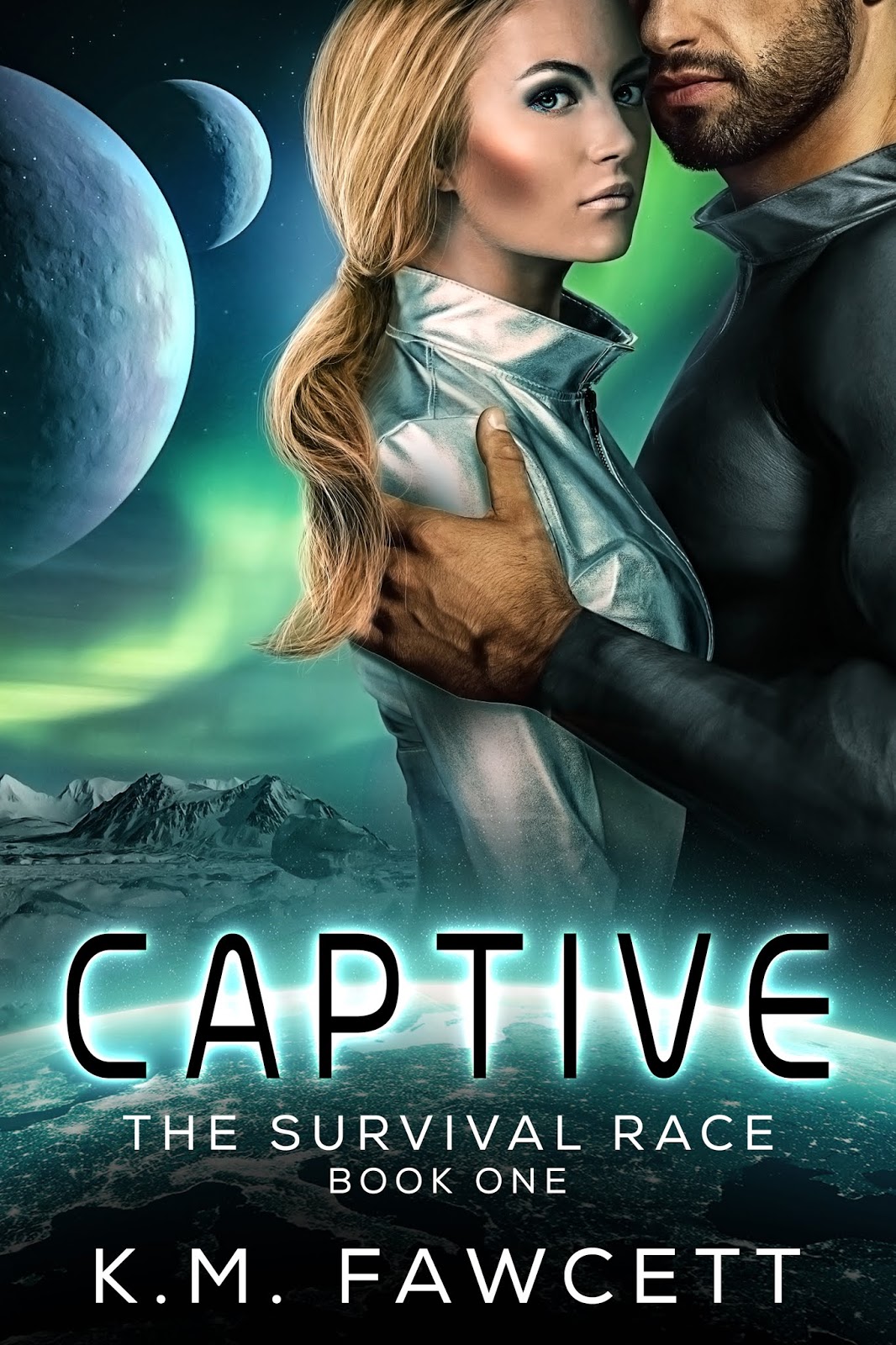
In the first book of the Survival Race series, CAPTIVE, alpha gladiator Max was forced to kill for entertainment in the survival races. Ruthless in battle, Max saw himself as a beast. The only time he felt human was when at stud in the breeding box. This was because he kept to his code of never taking a female against her will. If he broke that code, he'd lose all humanity and be nothing more than an animal, just like his alien masters wanted. So when his fiery new mate refuses him, he has a choice to make. Keep to his code or be punished.

In FEARLESS (Survival Race book 2) the heroine--who is working toward becoming a full-fledged shaman--is sent to heal the warlord's heart in order to stop him from starting an unwinnable war with the advanced alien rulers. To do this, she must soul jump him, which means she must enter his body and heal his darkest fears and repair his soul. But she needs to touch him first. Kedric, the hero, avoids her touch at all costs. Frustrated, Myia decides to seduce him. However, her moral code doesn't allow her to use trickery or lies, so young and innocent Myia learns how to perform the mating dance for Kedric and tells him up front that she is seducing him. This way, if he touches her, there was no trickery involved and her moral compass stays intact. Her plan doesn't go quite as she expects.

The next time you read or write, take notice of what codes—if any—drive the book's characters.

Share in the comments section a character with a code you enjoyed reading about, writing about, or watching on screen.

Happy reading and stay safe out there!

~ K.M. Fawcett
Romance for the Rebel Heart
www.kmfawcett.com

Friday, January 13, 2017

MY TOP TEN OTHERWORLDLY SIGHTS RIGHT HERE ON EARTH


Write what you know, they tell us. But that’s a tall order for those of us who write science fiction romance. We might be pilots, scientists, military vets, cops or medical professionals on the job, but it’s for certain none of us have traveled in an interstellar spaceship or stood on the surface of another planet. And for many of us our day jobs are even more mundane; working the front desk at the Y was no help at all in writing my Interstellar Rescue series, I can tell you.

Thankfully, like any SFR writer, I have a big imagination and a voracious appetite for books of all kinds. I’ve also seen wonders on this Earth that no author could ever imagine. If you think about it, so have you.

Bison chill by the hot springs in Yellowstone
My husband and I just came back from a trip to the first U.S. national park, Yellowstone, with takes up parts of Montana, Wyoming and Idaho. As every schoolchild knows, Yellowstone sits on a massive caldera, the magma climbing from deep in the earth to near the surface and heating ground water to form bubbling mud pools, hot springs, fumaroles and geysers. Chemicals in the water turn the springs and pools dramatic colors and, seen at a distance, the ground seems to smoke. Who could make this stuff up?

Yellowstone has been on my “bucket list” for years. But I’ve seen some spectacular things over the years, many of which I’ve used in some way in my writing:

2) Homestead Crater Dome in Utah—a hot spring inside a huge limestone dome. I went swimming in the warm water. Dark and a little creepy, but fun!

3) Mammoth Cave in Kentucky—the world’s longest known cave system. Stalactites and stalagmites, squeeze-through passages, an underground lake. Unforgettable!

4) A giant sequoia tree named General Sherman in California—the world’s largest tree (by volume) and its longest-living organism.

5) Stonehenge on the Salisbury plain, England—How? And why?

6) Aquamarine waters falling over a chalky white terrace in Pamukkale, Turkey—so bright it hurts your eyes and so delicate visitors must remove their shoes to step over the rock.


7) The Grand Canyon in Arizona—Phenomenal!

8) The ocean glowing with phosphorescence on a moonlit night in The Gambia, West Africa—Tiny diatoms in the water glowed in the dark.

9) An elephant—Think about it. No alien would ever look stranger or evoke such speculation that sentience lurked in a creature’s eyes.

10) An active volcano—Mine happened to be Kilauea in Hawaii. We stood on a cliffside of freshly-made black volcanic soil and watched lava flow out of the side of the mountain down to the sea, where it disappeared in a billow of steam. Primal!

I’ve been lucky enough to see these things in person. But long before I could travel, I had books, then television and movies, to take me there. I “know” a lot more than just what appears outside my window.

How about you? What spectacular sights have you seen here on Earth that inspire you to create new worlds in your fiction?

PING PONG

I enjoyed Pippa and Laurie’s vastly different takes on PASSENGERS this week. I particularly appreciated Laurie’s line-by-line take-down of the critics on this much-maligned movie. But then, you and I obviously agree on the salient points, Laurie! I’m glad you enjoyed the film despite its flaws, Pippa. At least you gave it a chance, which is more than I can say for many of the critics out there. Unfortunately, the state of criticism these days is such that professional film geeks tend to confuse “ponderous” with “deep” and “bleak” with “sophisticated.” Out-of-the-box thinking is not their forte, and this was an out-of-the-box film.

Cheers, Donna