Showing posts with label genre. Show all posts

Wednesday, January 26, 2022

Rewind: Where does my book fit?

This is a repeat of an article I wrote back in 2018. The issue remains the same and it's something that's very important to me.

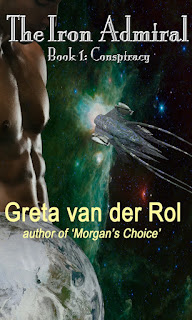
I sometimes wonder how big the market is for stories like mine. I can't in all conscience adorn my covers with beautiful male chests, although I'll admit I did try it, a long time ago. (See left) I suspect it worked, too, because readers at least read the blurb. But over time, my stories have become less explicit when it comes to sex, and I believe lots of man-titty signals explicit sex. On the flame scale, I wouldn't put my books at more than 2-3. They're not fade to black when the bedroom door closes, but you wouldn't want to use them as a 'how to'.

Science fiction is such a hard genre to define and the merge with fantasy is unavoidable. We write about 'science' that does not exist. It may in the future, but it's impossible now. Artificial gravity, forms of faster-than-light travel, advanced artificial intelligence, lifelike avatars, alien beings - the list goes on. It's not magic. We don't have magic in our SF worlds. But we can have shifters, vampires, strange alien psi powers and the like. Anything, really - as long as we claim a scientific explanation.

Anne McCaffrey's much-loved Pern series is one that has often been poo-pooed by the SF purists. It has dragons and mental telepathy, so it's fantasy. But the dragons are genetically engineered local species, with powers that evolved so the little fire lizards could escape the ravages of thread. Somebody once described the dragons as an ecologically sustainable air force. I like that. As far as I'm concerned, that's SF, not fantasy. As we say in the copyright notice on our books, "any resemblance to any person (or animal) is purely coincidental".

I actually find it harder to fit the romance half of the title. I'd be much more comfortable being in Science Fiction - romance. Genre, you see. It’s all about marketing. Into which pigeonhole does this book fit? I had some fun drawing a diagram to illustrate some of the complexities of genre.

 Some genres are pretty easy. In romance, the romance must be the focus of the plot, and it must have a happy ever after (HEA) ending or a happy for now (HFN) ending. I talked about the rules of romance here. But every genre has ‘shades of grey’ (yeah, yeah). Science fiction ranges between hard SF and soft SF. I discussed that here. On the hard SF – soft SF line, I’d put most space opera sort of in the middle. Star Wars and Star Trek would definitely be down the soft SF end, McDevitt’s books would be down the hard SF end. Romance has its continuum, too, often expressed in degrees of ‘heat’ (ie explicit sex scenes). In ‘sweet’ romance, the scene stops at the bedroom door. In erotic romance, the sex is explicit.

Now we get to science fiction romance, which is a combination of two genres. The SCIENCE romance – ROMANCE science line indicates what is the most important focus of the work. Would we have a story without the romance? Would we have a story without the science? I would suggest that real SFR should be down the science ROMANCE end – I think Avatar is a good example. Without the romance, there is no story. And in Avatar the explicitness of the sex component is most definitely ‘sweet’. Interestingly enough, one of McCaffrey’s early works, Restoree, is listed in science fiction. Yet Restoree is without a doubt science fiction romance, with a ‘sweet’ tag on the sex register. So SFR has been around for a while, mixed in with SF. But there isn't a lot. When I went looking, Linnea Sinclair's books were in romance, not SF.

It’s a pretty complex combination of components.

When I started writing, I knew I’d write SF because that’s what I like. But I wanted to add a bit of emotion to my writing. Most SF either seemed to leave out love and sex (Asimov), or it was so understated that it almost disappeared. An example of the latter is Moon’s Serrano series. SF was pulp fiction, with an expectation that it was fast-paced action-adventure. A response to a query I sent to a publisher around 2008 reinforced that belief. “Well written, but needs more action.” So I added more action. Still no cigar.

Okay, what about science fiction romance? Ah, but most SFR books are in the romance section. This has an advantage in one way, because romance sales are way, way more than SF. But it seems only a small subset of romance readers will read SF. Moreover, the expectation for the romance genre is that the romance is the core of the book. No romance, no story. I can honestly say that not one of my books fits that definition. Of them all, the Iron Admiral duo come closest and even with those two I had to do some serious tweaking for my editor to agree it had earned a romance tag.

We are told that sticking to one genre when writing is a good idea. And it makes sense. With that in mind, I resolved to write SFR, albeit with less emphasis on the romance. 

As far as SFR is concerned, I'm definitely going against the trend. I see more and more books that emphasize the sex. Reverse harem has become popular and sexual encounters with aliens and cyborgs is huge. It's a matter of personal taste, isn't it?

What’s the outcome? Well, if you’re looking for a fast-paced, action-packed read with a complex plot – come on in, sit right down. Would you like to call that pulp fiction? Sure. Will there be some emotional elements, some sex? Sure. Love is a powerful emotion, sex is a fundamental driving force. You’ll find those things in everything I write. Do I do my research? You bet I do. I try to make my science sound, my history correct, my settings convincing. 

And as it happens, SFR stalwart, Pauline Baird Jones, has just started a group for books like mine - and hers. Lots of action, lots of romance but the sex is not explicit. It's called Blush Free Books. If you're a reader who prefers to skip the steamy scenes, this might be a group for you. 

About Blush Free Books

Welcome to Blush Free Books, a website and newsletter dedicated to building a community of readers who love exciting, action-filled, and well-written books that are hotter than the clean and sweet, but close the door on the steamy scenes. 

There are communities aplenty for steamy and inspirational books, but there is an underserved group in the middle: readers who crave well-written books with all the action, suspense, excitement, and romance without the graphic sex. These stories have the edge-of-your-seat action with a hint of spicy language and some of the sexual tension not found in the cleaner-sweeter stories.

The group is not just for SFR. You'll find fantasy, crime, paranormal novels that all share that basic characteristic - the sex isn't explicit. If that's your thing, come on over and join us. Authors, you're invited, too. See you there!


Thursday, April 26, 2018

The vagaries of genre or where does my book fit?


Laurie's recent post about science fiction romance as a genre resonated with me. I sometimes wonder how big the market is for stories like mine. I can't in all conscience adorn my covers with beautiful male chests, although I'll admit I did try it, a long time ago. (See left) I suspect it worked, too, because readers at least read the blurb. But over time, my stories have become less explicit when it comes to sex, and I believe lots of man-titty signals explicit sex. On the flame scale, I wouldn't put my books at more than 2-3. They're not fade to black when the bedroom door closes, but you wouldn't want to use them as a 'how to'.

Science fiction is such a hard genre to define and the merge with fantasy is unavoidable. We write about 'science' that does not exist. It may in the future, but it's impossible now. Artificial gravity, forms of faster-than-light travel, advanced artificial intelligence, lifelike avatars, alien beings - the list goes on. It's not magic. We don't have magic in our SF worlds. But we can have shifters, vampires, strange alien psi powers and the like. Anything, really - as long as we claim a scientific explanation.

Anne McCaffrey's much-loved Pern series is one that has often been poo-pooed by the SF purists. It has dragons and mental telepathy, so it's fantasy. But the dragons are genetically engineered local species, with powers that evolved so the little fire lizards could escape the ravages of thread. Somebody once described the dragons as an ecologically sustainable air force. I like that. As far as I'm concerned, that's SF, not fantasy. As we say in the copyright notice on our books, "any resemblance to any person (or animal) is purely coincidental".

I actually find it harder to fit the romance half of the title. I'd be much more comfortable being in Science Fiction - romance. Genre, you see. It’s all about marketing. Into which pigeonhole does this book fit? I had some fun drawing a diagram to illustrate some of the complexities of genre.

 Some genres are pretty easy. In romance, the romance must be the focus of the plot, and it must have a happy ever after (HEA) ending or a happy for now (HFN) ending. I talked about the rules of romance here. But every genre has ‘shades of grey’ (yeah, yeah). Science fiction ranges between hard SF and soft SF. I discussed that here. On the hard SF – soft SF line, I’d put most space opera sort of in the middle. Star Wars and Star Trek would definitely be down the soft SF end, McDevitt’s books would be down the hard SF end. Romance has its continuum, too, often expressed in degrees of ‘heat’ (ie explicit sex scenes). In ‘sweet’ romance, the scene stops at the bedroom door. In erotic romance, the sex is explicit.

Now we get to science fiction romance, which is a combination of two genres. The SCIENCE romance – ROMANCE science line indicates what is the most important focus of the work. Would we have a story without the romance? Would we have a story without the science? I would suggest that real SFR should be down the science ROMANCE end – I think Avatar is a good example. Without the romance, there is no story. And in Avatar the explicitness of the sex component is most definitely ‘sweet’. Interestingly enough, one of McCaffrey’s early works, Restoree, is listed in science fiction. Yet Restoree is without a doubt science fiction romance, with a ‘sweet’ tag on the sex register. So SFR has been around for a while, mixed in with SF. But there isn't a lot. When I went looking, Linnea Sinclair's books were in romance, not SF.

It’s a pretty complex combination of components.

When I started writing, I knew I’d write SF because that’s what I like. But I wanted to add a bit of emotion to my writing. Most SF either seemed to leave out love and sex (Asimov), or it was so understated that it almost disappeared. An example of the latter is Moon’s Serrano series. SF was pulp fiction, with an expectation that it was fast-paced action-adventure. A response to a query I sent to a publisher around 2008 reinforced that belief. “Well written, but needs more action.” So I added more action. Still no cigar.

Okay, what about science fiction romance? Ah, but most SFR books are in the romance section. This has an advantage in one way, because romance sales are way, way more than SF. But it seems only a small subset of romance readers will read SF. Moreover, the expectation for the romance genre is that the romance is the core of the book. No romance, no story. I can honestly say that not one of my books fits that definition. Of them all, the Iron Admiral duo come closest and even with those two I had to do some serious tweaking for my editor to agree it had earned a romance tag.

We are told that sticking to one genre when writing is a good idea. And it makes sense. With that in mind, I resolved to write SFR, albeit with less emphasis on the romance.

What’s the outcome? Well, if you’re looking for a fast-paced, action-packed read with a complex plot – come on in, sit right down. Would you like to call that pulp fiction? Sure. Will there be some emotional elements, some sex? Sure. Love is a powerful emotion, sex is a fundamental driving force. You’ll find those things in everything I write. Do I do my research? You bet I do. I try to make my science sound, my history correct, my settings convincing. I suppose, when it comes right down to it, I’d prefer to see my books in the science fiction section. Both they, and I, feel more comfortable there - but SF is still not comfortable with soppy emotion. Just as well I don't have to pay a mortgage with my earnings.


Thursday, April 30, 2015

The vexed question of genre


Genre. Heated arguments about genre come up pretty much every year – at least. Everybody has an opinion, everybody has a definition. So let's discuss what it really means.

Essentially, genre is the label a book is given to place it on a shelf in a bookshop. The purpose is to direct readers to the place they are most likely to find the books they want.

In a large bookshop with lots of floor space there'll be a whole wall of 'general fiction'. And then there'll be genres. Crime, thrillers, kids books, historical fiction, fantasy, science fiction, horror and a huge space labeled 'romance' - just to name a few. If you go into a smaller bookshop science fiction and fantasy will almost certainly be lumped together. George RR Martin, Ursula Le Guin, Jack McDevitt and Terry Pratchett will be cheek by jowl with Tolkien, McCaffrey and Terry Brooks in an uneasy mix of spaceships, dragons, werewolves, aliens, swords, blasters, FTL drives and magic rings. And other stuff.

It makes sense, of course. When I enter a bookshop (real or online) I'll end up at the science fiction section. Because that is what I read. If nothing there floats my boat, it'll be crime – murder mysteries, police procedurals and the like. For that reason it's a very good idea to put a label on your books, having made certain that the label matches the book's content. There's nothing more likely to put off a potential buyer than for that person not to get what was promised.

This blog, and most of what I write, is science fiction romance, so let's look at how SFR fits into bookshops and reader expectations.

Several years ago, someone suggested I'd like Linnea Sinclair's Games of Command. So I went looking for the book in a real-world bookshop. I found it, not in the SF section, but in romance. Since I don't read non-SF romance, I would not have found it if I wasn't looking for that book. That was a few years ago, and one hopes we've managed to persuade some of the die-hard SF fans that the girl-cooties won't hurt their SF, so that Games of Command can stand proudly beside Elizabeth Moon's Vatta series on the SF shelves. But I suspect we still have a loooong way to go.

Each 'genre' is supposed to have rules. But really, they're not 'rules', they're reader expectations. So choosing a genre for your book is important. With ebooks and Amazon, we can narrow our work down to a niche – at least, to some extent. In the case of SFR, Amazon has such a niche – it's Romance → Science Fiction. Not Science Fiction → Romance. That distinction is important. It kind of underlines the need for SFR books to have at the very least a very strong romance arc, with a HEA (happy ever after) or HFN (happy for now) ending, because that is what romance readers expect. If that's not what your book offers then you'll have to make do with Science Fiction, with romance tags and a carefully worded blurb, and perhaps the cover, indicating the romance arc. Thereby warning the SF die-hards that your book might include emotional squishy bits and the risk of girl-cootie contamination. Indeed, you might end up labelling your book as paranormal rather than SF, because it includes shape shifters or aliens or alien vampires.

Although I certainly place my books into science fiction → romance, I also place them in science fiction → space opera. To be honest, I think they sit more comfortably in the latter and I make no secret of that. After all, my tag line is “fast-paced action adventure with a dollop of romance”. I wish there was a science fiction → romance category. But there's not. So I work with what's available.

If we're talking online communities of writers, the definition of SFR is broader than the limitations imposed by Amazon's book categories. SFR is a very broad genre, with room for many, many derivations. Although science fiction, by definition, eschews magic, fantasy elements can be included in an SF story. The best example I can think of is Star Wars. Time travel, steampunk, cyberpunk, dystopian, space opera, alien encounters etc etc can all be part of SFR – provided that strong romance arc is there.

I'd love to know how you categorise your SFR. And what categories you would suggest if you could influence Amazon.


Wednesday, November 2, 2011

Writer's Journey: What category/genre taught me about craft

Donna's great post on Stephen King, along with a number of recent conversations about SF v. SFR, has got me thinking a lot about category. Because how many of us, really, set out to write our first book with a specific subgenre in mind? 

When I started writing Ghost Planet in 2008, I had never read SFR that was actually labeled as such. But I knew what I best liked to read were classics (romantic stories set in the past) or romantic stories with a strong speculative element - sci-fi, fantasy, paranormal, etc. Escapism, yes, but escapism with a preference for discovering new worlds, whether historical or fictional. I was and am drawn to the freshness of the conflict between heroine and hero in these unfamiliar settings. 

I did not believe I was a romance reader, because I did not shop in the romance section of the store. Some of the most romantic speculative books I've read are shelved in SF/F or general fiction - Outlander and The Time Traveler's Wife, for example (though both of these books break traditional romance rules). 

The first version of Ghost Planet (my first novel) was just the kind of book I like to read - the right mix of romantic and speculative. But it was suggested to me that the book did not come down firmly enough on one side or the other, and because of that I needed to revise. I flailed around and tried to understand and apply the advice I'd received. The first major revisions I undertook didn't *feel* right, but I was too inexperienced to recognize and understand that feeling. (This is a good place to point out that this post is not about regrets, because I have none. It's about a learning process.)

After months of rewrites that took the book in ever stranger and stranger directions, I sent it to an agent who was waiting. What I got back was the most in-depth, and frankly, upsetting, critique I'd ever received. It was not upsetting because she was a mean person - she is in fact quite a kind and likable person. It was upsetting because she was right - I felt it deep down - and I knew it meant I had to start over. From scratch. Ghost Planet, by Sharon Lynn Fisher, page 1. 

But *nothing* she said in her critique had anything to do with genre. It had to do with what I've come to consider the two most critical elements of mainstream fiction - character development and story tension. Also, in my experience, the two hardest elements to master. (Wow, I remember once upon a time I thought, "As soon as I get to the point I can write well, I'll have it made!" How cute.)

I believed in my story, and I believed in my characters, so I started over. Because I was still haunted by the genre question, I also read a craft book that had been recommended to me (thanks, Donna!), On Writing Romance, by Leigh Michaels.

I'll skip the gory rewrite details and cut right to lessons learned. 

I think the feedback I got that the book wasn't enough this or that was the result of people trying to identify ways to improve it, or to explain why they were rejecting. I think this may be an idea that occurred to them while reading it, when really it was something deeper and harder to pinpoint. I sometimes struggle with this myself when I read published books - "why didn't I love it?" And I don't always figure it out. It can be a simple matter of taste. It can also be a sign of a problem. We don't often have enough objectivity about our own work to know which. Until later.  

What that craft book and my rewrite process taught me was not that my book wasn't enough one genre or another. My journey was only superficially about learning "how to write romance." What I learned was that if you are going to put a relationship between two people at the core of your story, those two people must be compelling and three-dimensional, and there must be tension and believable conflict between them. This applies to any kind of relationship at the center of any category of story (for a radically different example, consider Of Mice and Men). 

It wasn't that the first version of my story didn't have enough romance. It didn't have *effective* romance. I had also fallen short in fleshing out some of the sci-fi elements, but I consider this a secondary issue, because it pretty much resolved itself in the process of tuning up my characters. 

I think the takeaway in all this, if there is one, is something Donald Maass addresses in The Fire in Fiction. (Liberal paraphrasing follows…) Authors get too hung up on the selling and marketing of things. What we need to be hung up on is writing. Because the content of a book is what makes it a bestseller, not the label we stick on it.     

Agree? Disagree? Do you think about genre when you're writing, or do you just write? As a reader, do you consider category/genre when buying a book?